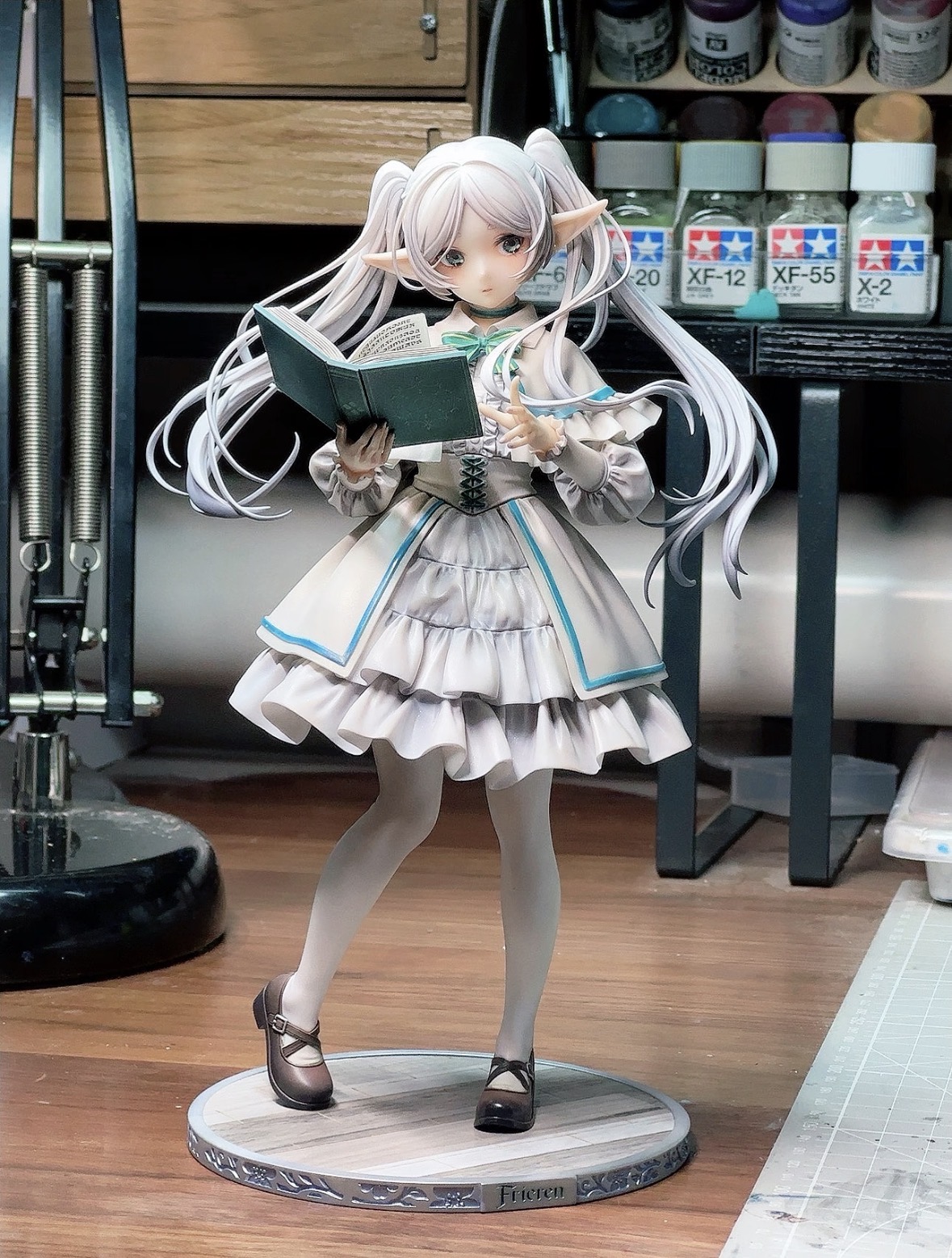
The acquisition of high-end anime collectibles has evolved from a niche hobby into a sophisticated market involving complex material science, engineering challenges, and significant financial commitments. The “Frieren: Beyond Journey’s End” Reading Figure, featuring the protagonist in a contemplative, book-holding stance, presents a unique case study in balancing aesthetic serenity with structural integrity. For the discerning collector, evaluating this specific piece requires more than an appreciation for the source material; it demands a rigorous analysis of manufacturing techniques, material longevity, and the nuances of “custom” versus mass-produced designations. This guide provides the analytical framework necessary to determine if this specific depiction of the elven mage meets the standards of a high-tier collection.
Why This Purchase Decision Is More Complex Than It Appears
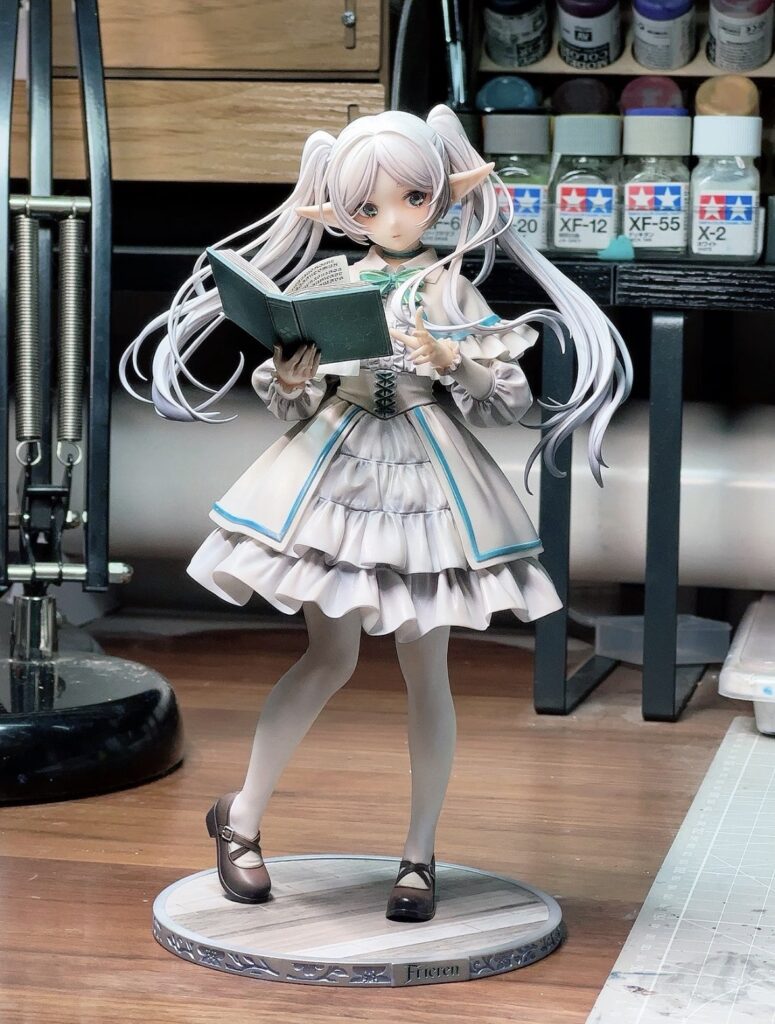

Frieren Figure Custom Collectible Frieren: Beyond Journey's End Reading
Frieren is depicted in a standing pose, holding an open book with her right hand while pointing at it with her left, embodying a moment…
View Product →At first glance, a static standing figure appears to be a low-risk acquisition compared to “battle-pose” figures with complex effects pieces. However, the Frieren “Reading” figure introduces subtle variables that first-time buyers often overlook. The most significant nuance lies in the “custom” designation. In the figure industry, “custom” can range from a bespoke, hand-painted resin kit to a small-batch production from an unlicensed third-party studio. Each of these paths carries vastly different implications for quality control, resale value, and material durability.
Furthermore, the character design of Frieren presents a specific technical challenge: her long, flowing silver-white hair. To capture the “dynamic movement” described in the product background while maintaining a static pose, the manufacturer must balance the weight of the hair against the structural strength of the neck joint and the base. Without proper internal reinforcement, these cascading elements are prone to “sagging” over several years—a phenomenon where the plastic slowly deforms under its own weight and ambient temperature. Understanding these hidden mechanical stresses is essential before committing to a purchase.
The Critical Evaluation Framework
Performance Specifications That Actually Matter
When evaluating a figure of this nature, the primary performance metric is “sculpt fidelity.” This refers to how accurately the three-dimensional object translates the 2D character design, particularly the facial features. For Frieren, the “serene” expression is notoriously difficult to capture; even a millimeter’s deviation in eye placement or the curvature of the mouth can shift the expression from “wise” to “vacant.” Buyers should prioritize figures that utilize high-resolution 3D printing for the initial prototype, as this ensures the symmetry required for her minimalist facial features.
Another critical specification is the scale and footprint. Most high-end figures are produced in 1/7 or 1/8 scale. A 1/7 scale figure typically stands around 23–25cm, allowing for finer detail in the “Reading” book’s pages. Prospective buyers must verify the legibility of the text or symbols on the open book held in Frieren’s right hand. In premium collectibles, these are often achieved through high-definition water-slide decals or intricate pad printing. If the promotional images show blurry or generic markings, it indicates a lack of attention to detail that likely extends to other areas of the figure’s construction.
Build Quality and Material Science Considerations
The choice of material dictates both the visual finish and the lifespan of the collectible. Most commercial figures utilize a combination of PVC (Polyvinyl Chloride) and ABS (Acrylonitrile Butadiene Styrene). PVC is favored for the body and hair due to its flexibility and ability to hold fine detail, while ABS is a harder plastic used for bases and accessories like the book to prevent warping.
In a “custom” Frieren figure, one must investigate whether the piece is made of solid resin or hollow-cast PVC. Solid resin offers a weightier, more “premium” feel and allows for sharper edges in the sculpt of the hair, but it is significantly more brittle. If the figure’s hair is as dynamic and cascading as described, resin versions are at a much higher risk of snapping during transit. Conversely, high-grade PVC with a matte finish is often superior for Frieren’s clothing, as it mimics the texture of fabric better than the glossy finish sometimes found in lower-end resin casts. The paint application should also be scrutinized for “gradient depth”—specifically how the silver-white hair transitions to translucent or shadowed tips, which adds a sense of volume and realism.
Collection Compatibility and Long-Term Display Viability
A figure does not exist in a vacuum; it must integrate into a broader “ecosystem” of a collection. Compatibility involves both the aesthetic style—ensuring the color palette matches other figures from the Beyond Journey’s End series—and the physical mounting system. The “Reading” pose suggests a museum-style display. Buyers should evaluate the base design: is it a generic clear plastic disc, or a themed environment (like a stone floor or grassy patch) that enhances the storytelling?
Long-term viability is often compromised by UV exposure and “plasticizer migration.” The latter occurs when the chemicals that keep PVC flexible begin to leak out, creating a sticky residue on the surface. This is more common in “custom” or “unlicensed” figures where the chemical composition of the plastics may not be as strictly regulated as those from major manufacturers like Good Smile Company or Alter. Buyers should seek information on the manufacturer’s history regarding “leaking” or “fading” to ensure the figure remains a centerpiece rather than a maintenance burden.
Dissecting the Budget Tiers
Entry-Level: What You Sacrifice and What You Gain
Entry-level versions of the Frieren figure, often referred to as “Prize Figures,” typically retail between $20 and $40. At this tier, you gain an affordable representation of the character that is durable and “playable.” However, the sacrifices are substantial. The “dynamic hair” will likely be molded in fewer pieces, resulting in visible seam lines where the plastic parts join. The paintwork will be “flat,” lacking the subtle shading required to make silver hair look realistic. The book she holds will likely feature molded lumps rather than individual page textures, and the “pointing” hand may lack defined fingernails or knuckle creases. For a casual fan, this is a cost-effective choice, but it fails the “analytical scrutiny” of a serious collector.
Mid-Range: The Engineering Sweet Spot Explained
The mid-range, typically priced between $120 and $180, represents the engineering sweet spot. These are usually 1/7 scale PVC figures produced by established brands. In this tier, the “Reading” pose is executed with precision. The hair is cast in multiple delicate strands to create true depth, and the paint utilizes multi-layered gradients. The structural engineering is tested to ensure that the figure remains upright without leaning over time. This tier offers the best balance of “diminishing returns,” where paying more often yields only marginal gains in quality. For most collectors, this is the most rational investment point, providing a professional finish that respects the source material’s art style.
Premium: When the Price Premium Is Justified by Data
Premium figures, often exceeding $300, are usually large-scale (1/4 scale) or “Custom” resin statues from boutique studios. The price premium is justified only if the data supports it: specifically, the use of “Polystone” (a stone-powder and resin mix), hand-painted details by known artists, and extremely limited production runs (e.g., 500 pieces worldwide). In the context of the Frieren Reading figure, a premium version might include LED lighting in the base or “real-media” elements, such as a fabric cloak or a book made of actual paper and leather. This tier is for the “investor-collector” who prioritizes rarity and “shelf presence” over the practical durability of PVC.
Common Buyer Mistakes — and How to Avoid Them
Frieren Figure Custom Collectible Frieren: Beyond Journey's End Reading
Frieren is depicted in a standing pose, holding an open book with her right hand while pointing at it with her left, embodying a moment…
View Product →Specification Traps That Look Good on Paper
One of the most frequent mistakes is over-relying on “3D Renders” provided in product listings. These digital images represent a mathematical ideal that physical manufacturing cannot always replicate. A render can show impossibly thin strands of hair that, in reality, must be thickened to survive the molding process. To avoid this trap, buyers should always look for “Prototype Photography” (photos of the physical grey-sculpt or painted master) rather than digital files. If a listing only uses renders, it is a significant red flag regarding the final product’s quality.
Another trap is the “Scale Misconception.” A 1/7 scale figure from one manufacturer may not be the same height as a 1/7 scale from another due to different interpretations of the character’s “canonical” height. For Frieren, who is physically petite, a 1/7 scale figure might appear smaller than expected compared to other characters. Buyers should check the actual height in centimeters rather than relying solely on the scale ratio to ensure it fits their shelving units.
Marketing Language vs. Measurable Performance Differences
Marketing copy often uses subjective terms like “exquisite,” “lifelike,” or “museum-quality.” These terms have no technical meaning. Instead, buyers should look for measurable indicators of quality. For example, “Hand-painted” is a vague term (almost all figures involve some hand-painting), whereas “Multiple layers of airbrushed shading” or “UV-resistant coating” describes a specific process.
Similarly, the term “Custom” is often used to bypass the fact that a product is unlicensed. While some unlicensed “custom” studios produce work that exceeds official releases, they lack the legal accountability of licensed products. If a figure is damaged or arrives with a defect, an unlicensed “custom” studio may not offer the same level of customer support or replacement parts as a major corporation. Collectors must weigh the “uniqueness” of a custom sculpt against the lack of consumer protections.
The Decision Framework: Matching Product to Buyer Profile
Questions to Clarify Before Committing
Before clicking “purchase,” the buyer must answer three critical questions. First: “What is the primary light source in my display area?” If the figure will be under direct sunlight, the silver-white hair of the Frieren figure is at high risk of yellowing; a UV-resistant PVC becomes a mandatory requirement. Second: “Am I purchasing for aesthetic enjoyment or resale value?” If it is for resale, an official licensed figure from a Tier-1 manufacturer is the only rational choice, as “custom” unlicensed pieces have a volatile secondary market. Third: “Do I have the tools to repair resin?” If the buyer chooses a custom resin piece, they must be prepared with cyanoacrylate adhesives and the technical skill to fix the delicate hair strands that often break during unboxing.
Red Flags to Watch for in Product Listings
When browsing listings for the Frieren Reading figure, several red flags should trigger an immediate exit. The most prominent is “Stock Photos Only.” If the seller does not provide “in-hand” photos or photos of the actual box, there is a high probability of receiving a “bootleg”—a counterfeit cast made from inferior, often toxic, plastics.
Another red flag is a price that is significantly lower than the “Market Average.” If a high-detail 1/7 scale Frieren is listed for $40 when the official retail is $150, the product is almost certainly a counterfeit. Finally, pay attention to the “Manufacturer” field. If it is listed as “Generic” or “China Version” (a common euphemism for bootleg), the build quality and material science will not meet the standards outlined in this guide.
Final Checklist Before Purchase
To ensure a fully informed decision, use the following checklist:
1. Material Confirmation: Is the figure PVC/ABS (durable) or Resin (fragile/high detail)?
2. Scale Verification: Have you checked the height in centimeters against your available shelf space?
3. Licensing Status: Is this an official product from a known studio, or an unlicensed “custom” piece?
4. Paint Detail: Do the photos show “gradient shading” in the hair and “crisp printing” on the book?
5. Structural Integrity: Does the figure have a sturdy mounting point to the base, or does the pose look prone to “leaning”?
6. Seller Reputation: Does the vendor have a documented history of secure packaging for delicate items?
By applying this analytical framework, the collector moves beyond the emotional pull of the Frieren: Beyond Journey’s End narrative and makes a decision based on the tangible realities of high-end manufacturing. The “Reading” figure is a testament to the character’s quiet strength, but only a version that passes these technical hurdles will truly stand the test of time in a collection.