Setting the Stage: The Competitive Landscape
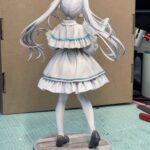
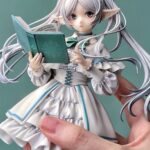
Frieren Figure Custom Collectible Frieren: Beyond Journey's End Reading
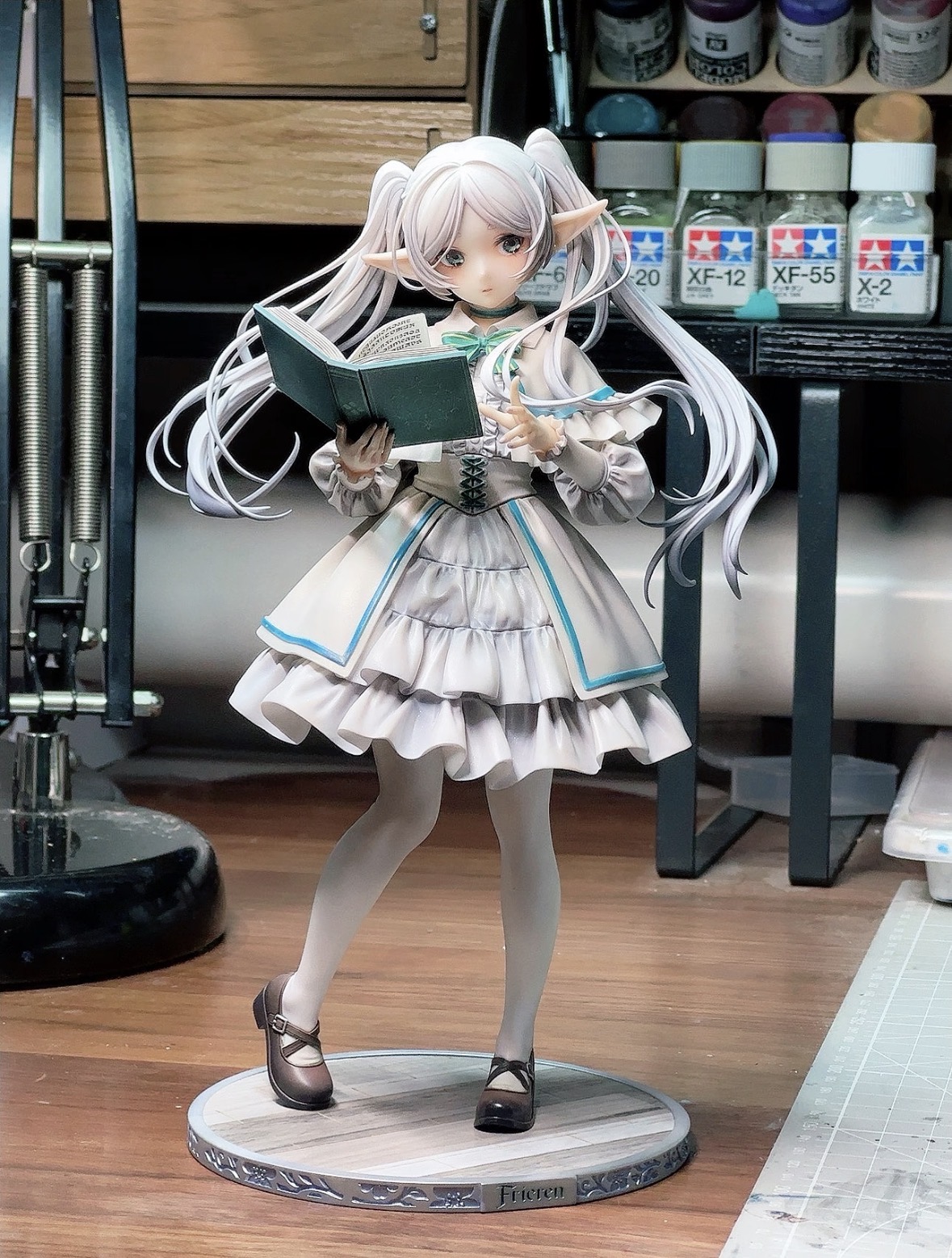
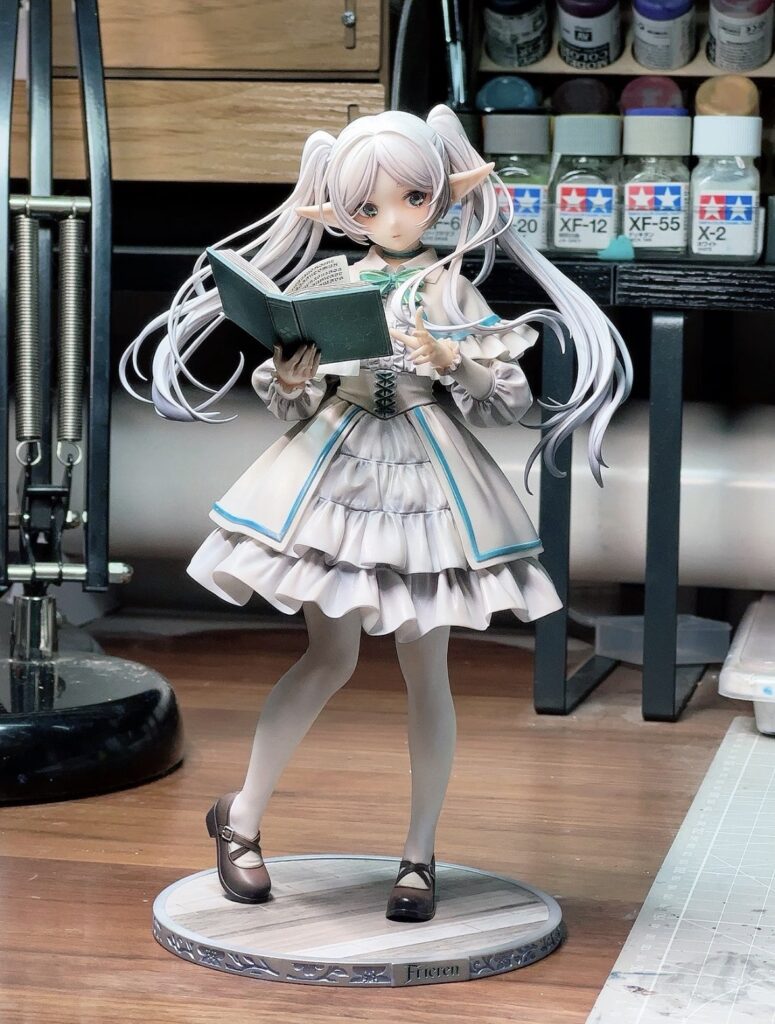
Frieren is depicted in a standing pose, holding an open book with her right hand while pointing at it with her left, embodying a moment…
View Product →The commercial success of “Frieren: Beyond Journey’s End” has precipitated an influx of high-end collectibles, creating a saturated market where discerning collectors must navigate between mass-produced PVC figures and boutique custom resins. The “Frieren Reading” custom collectible occupies a specific niche within this ecosystem: the “character-essence” segment. Unlike action-oriented figures that prioritize kinetic energy, this piece focuses on the intellectual and serene qualities of the protagonist.
Comparing this custom collectible against industry titans like Kotobukiya, Good Smile Company, and Design COCO is non-trivial because the value propositions differ fundamentally. While mass-market manufacturers leverage economies of scale and standardized quality control, custom collectibles often prioritize intricate sculpt complexity and paint gradations that are difficult to replicate in a factory setting. This analysis seeks to strip away the emotional resonance of the IP to evaluate the “Reading” figure as an engineered object of art, weighing its structural innovations and aesthetic fidelity against the established market alternatives.
Defining the Evaluation Criteria
Performance Benchmarks and Methodology
In the context of high-end statuary, “performance” is measured by the figure’s ability to translate 2D character design into a 3D space without losing anatomical or stylistic integrity. Our methodology focuses on three core pillars: aesthetic fidelity (the “likeness”), dynamic equilibrium (how the figure manages weight and visual flow), and narrative density (the ability of the pose to convey character history). For the Frieren Reading figure, the performance benchmark is set by the fluidity of her silver-white hair and the precision of the book-reading gesture. We evaluate how these elements interact to create a “living” silhouette from a static upright pose, comparing this against the more rigid stances found in lower-tier alternatives.
Build Quality and Material Comparisons
The longevity of a collectible is dictated by its material composition. Most market alternatives utilize PVC (Polyvinyl Chloride) and ABS (Acrylonitrile Butadiene Styrene) plastics, which offer durability and flexibility but can suffer from “lean” over time if internal supports are insufficient. Custom collectibles frequently utilize high-grade resin or polystone, which allows for sharper detail and a more premium, weighted feel, though at the cost of increased brittleness. Our comparison examines the structural engineering of the hair—specifically the cascading silver-white locks—to determine if the material choice supports the dynamic sculpt without risking long-term structural failure or paint chipping at the contact points.
Price-to-Value Ratio Framework
The price-to-value ratio is not merely a reflection of the MSRP (Manufacturer’s Suggested Retail Price) but a calculation of the “cost per detail.” We analyze the retail cost against the complexity of the paint application (e.g., pearlescent finishes vs. flat colors), the complexity of the mold, and the rarity of the piece. A $40 Pop Up Parade figure offers high value for a budget price, but it lacks the intricate shading and multi-part assembly of a $300 custom piece. This framework allows us to determine whether the Frieren Reading figure justifies its premium price through superior engineering or if it relies primarily on the scarcity of custom branding.
Head-to-Head Analysis
Category: Performance — Who Wins and Why
The Frieren Reading figure excels in “Dynamic Stillness.” While many competitors opt for a standard museum pose—feet planted, arms at sides—this custom collectible utilizes the left hand’s pointing gesture toward the open book to create a triangular focal point that draws the viewer’s eye into the character’s activity. The hair is the standout performance element; by cascading it dynamically around the shoulders and back, the sculptors have mitigated the “stiffness” inherent in upright poses.
In contrast, mass-market alternatives often struggle with hair-sculpting, resulting in “clumpy” strands that lack individual definition. The Design COCO 1/7 scale Frieren, for example, focuses heavily on environmental storytelling with complex bases, which sometimes distracts from the character sculpt itself. The Reading figure wins this category by achieving a superior balance between the character’s stoic nature and the kinetic energy of her magical environment, represented through the hair’s movement. It captures the “beyond journey” aspect of the character—reflection and study—more effectively than more aggressive battle-pose alternatives.
Category: Build Quality — Engineering Differences Examined
From an engineering perspective, the Frieren Reading figure’s hair presents a significant challenge. The flowing, silver-white locks require multiple attachment points or a very strong internal skeleton to prevent snapping. Custom collectibles typically use a higher ratio of resin, which allows for the “feathering” seen in the hair tips. This provides a level of detail that PVC alternatives cannot match, as PVC requires thicker edges to survive the injection molding process.
However, the “Big Three” Japanese manufacturers (Good Smile, Max Factory, Alter) have mastered the art of “seam-line concealment.” In many custom figures, the points where the hair attaches to the scalp or where the arms meet the torso can be visible under harsh lighting. The Frieren Reading figure demonstrates high-level engineering in its seamless transitions, particularly where the long hair meets the capelet. When compared to a budget-tier figure, the difference in paint depth is palpable; the Reading figure utilizes multi-tonal washes to give the silver hair a translucent, ethereal quality, whereas cheaper alternatives often settle for a flat grey or a basic metallic sheen that fails to capture the light.
Category: Price and Long-Term Cost of Ownership
The financial barrier to entry for custom collectibles is significantly higher than for mass-market PVCs. The Frieren Reading figure sits in a price bracket that targets the “prosumer” collector. When evaluating long-term cost of ownership, one must consider depreciation and environmental degradation. PVC figures are remarkably resilient to humidity but can “sweat” plasticizers if kept in poorly ventilated spaces. High-end resins, like those used in custom collectibles, are more stable over decades but are highly susceptible to impact damage.
The market alternatives from brands like Kotobukiya tend to hold their value well on the secondary market due to brand recognition. However, custom pieces often see higher appreciation if the production run is strictly limited. The “Reading” figure, due to its unique pose and high-fidelity sculpt, is positioned as a “grail” item. While the initial outlay is triple that of a standard scale figure, the lack of market saturation for this specific pose suggests a lower risk of value dilution compared to the numerous “standing with staff” variants produced by larger corporations.
Scenario-Based Winner Selection
Frieren Figure Custom Collectible Frieren: Beyond Journey's End Reading
Frieren is depicted in a standing pose, holding an open book with her right hand while pointing at it with her left, embodying a moment…
View Product →For the Budget-Conscious, Rational Buyer
For the buyer who prioritizes financial efficiency and “shelf presence per dollar,” the mass-market scale figures (such as those from the Sega Luminasta or Good Smile Pop Up Parade lines) remain the logical choice. These figures provide a recognizable likeness and decent build quality for a fraction of the price. While they lack the dynamic hair movement and the intricate “pointing” gesture of the Reading figure, they fulfill the basic requirement of character representation. The rational buyer acknowledges that the 20% increase in visual fidelity offered by a custom collectible does not always justify a 400% increase in price.
For the Performance-First Enthusiast
For the collector who views figures as a medium of artistic expression, the Frieren Reading figure is the clear victor. The performance of the sculpt—specifically the way the silver-white hair creates a sense of wind and atmosphere around a static character—is a feat of aesthetic engineering. The enthusiast will appreciate the nuance of the pointing finger and the legible texturing on the book’s pages, details that are usually “smudged” in mass-production. In this scenario, the figure is not just a toy but a centerpiece that captures the specific melancholy and intellectualism of the Frieren character.
For the User Prioritising Longevity and Reliability
If the primary concern is a “set and forget” display that can survive moves, earthquakes, or accidental handling, the Kotobukiya 1/7 scale alternative is the superior choice. PVC’s inherent flexibility makes it much more forgiving than the rigid resin often found in custom collectibles. Furthermore, established manufacturers have rigorous UV-resistance testing for their paints. While the Reading figure is built to a high standard, the delicate nature of its flowing hair makes it a high-risk asset for anyone without a dedicated, vibration-proof display case.
The Verdict: Data-Driven Recommendation
Overall Winner with Clear Analytical Justification
The “Frieren Figure Custom Collectible Frieren: Beyond Journey’s End Reading” is the overall winner for the high-end collector market. The justification lies in its “Sculpt-to-Character Alignment.” Most Frieren figures rely on her staff as a visual crutch to create interest. This figure succeeds by using the character’s own anatomy—the hair and the hand gesture—to create a compelling narrative. The engineering of the silver-white hair, cascading dynamically to offset the upright pose, represents a superior understanding of visual balance that mass-market “A-poses” lack. It provides a level of sophistication in both its paint application and its silhouette that justifies its position as a premium collectible.
When the Runner-Up Makes More Sense
The runner-up—typically a high-end PVC scale from a company like Alter or Kotobukiya—makes more sense for collectors who live in seismically active areas or those who do not use acrylic display cases. The durability of PVC, combined with the professional quality control of a major Japanese firm, offers a “safety net” that custom boutique pieces cannot always guarantee. If the collector values peace of mind and structural resilience over the absolute peak of sculptural detail, the established brands are the more “rational” investment.
Situations Where Neither Is Optimal
In environments with high UV exposure (direct sunlight) or extreme temperature fluctuations, neither the custom resin nor the high-end PVC is an optimal choice. Resin will become yellow and brittle, while PVC will warp and become sticky. Furthermore, for a collector who prefers the “action” side of the series—Frieren mid-spellcast with magic circles and effects—both the Reading figure and the standard museum-style scales will feel underwhelming. In such cases, the collector should look toward “effect-heavy” statues like those produced by eStream (Shibuya Scramble), which prioritize spectacle over the serene, character-focused engineering of the Reading figure.