Overview: The Case for Examining This Product
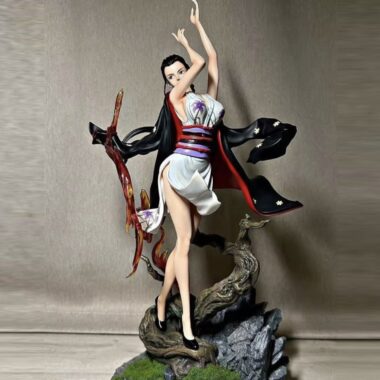
Nico Robin Figure One Piece Wano Country Arc Custom sculpture dynamic dancing pose geisha outfit
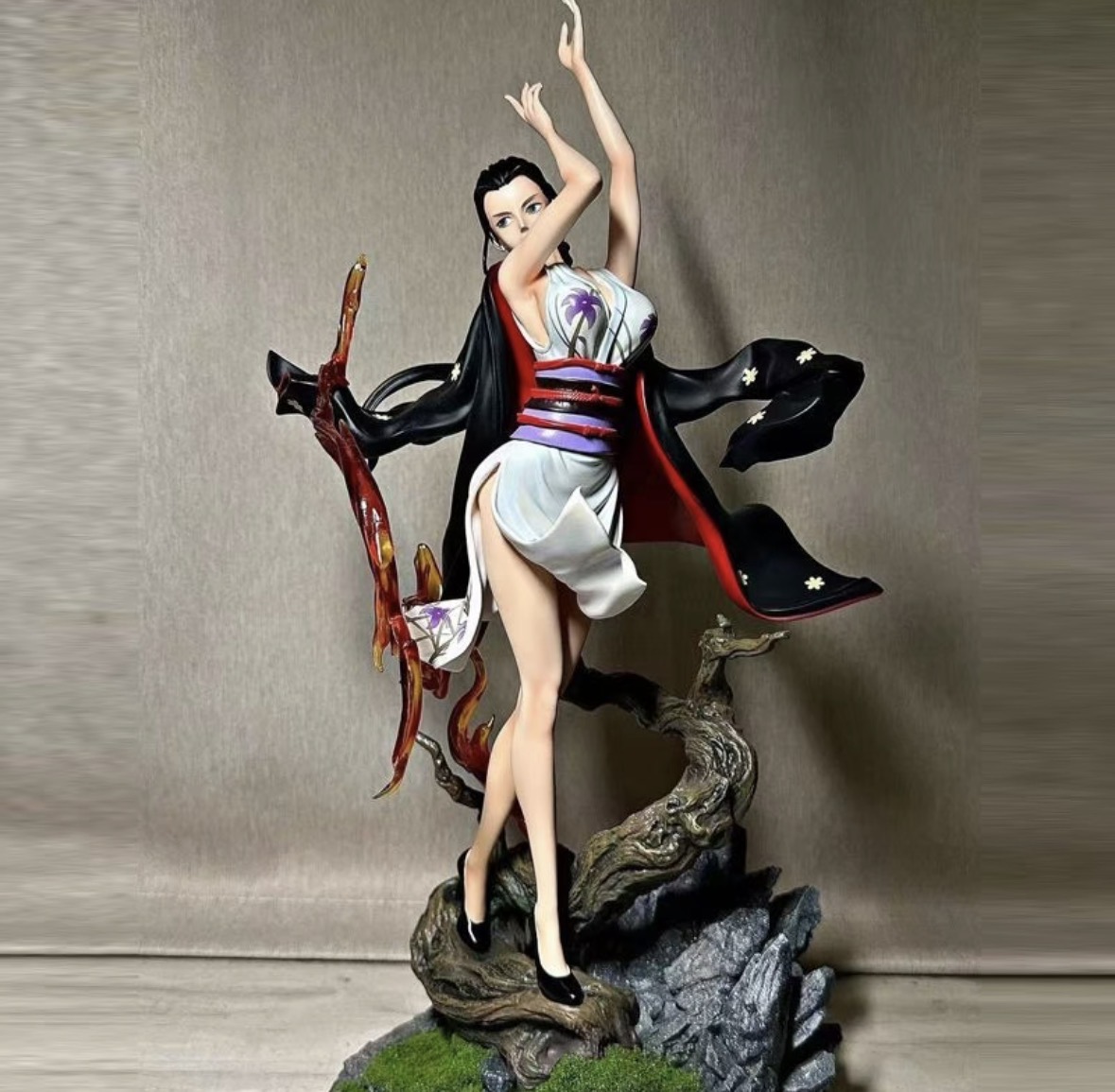
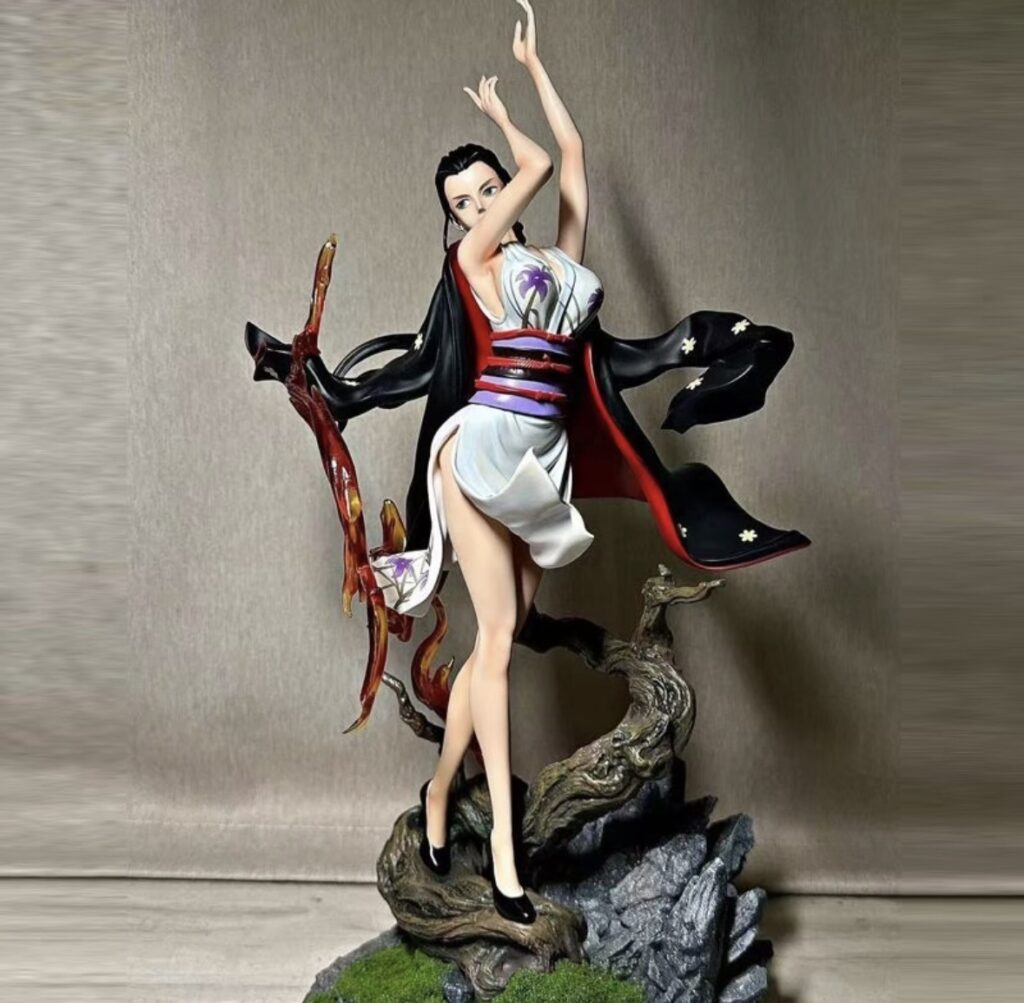
Nico Robin stands in a graceful dancing pose with her arms raised high and her body arched in a fluid motion. She is positioned dynamically…
View Product →In an increasingly saturated market for anime collectibles, the “Nico Robin Figure One Piece Wano Country Arc Custom sculpture dynamic dancing pose geisha outfit” distinguishes itself as a product demanding rigorous analytical scrutiny. Unlike mass-produced static figurines, this offering positions itself as a “custom sculpture,” implying a heightened artistic intent and a more complex execution challenge. Its portrayal of Nico Robin in a highly dynamic, graceful dancing pose, adorned in a culturally specific geisha outfit from the Wano Country Arc, directly engages with both character interpretation and sculptural ambition. This confluence of specific character lore, intricate costume design, and a challenging kinetic pose elevates it beyond a mere collectible, presenting it as a potential piece of interpretive art. Evaluating such a product necessitates a deep dive into its design philosophy, material integrity, and the efficacy of its artistic execution, particularly as it targets a discerning segment of collectors who prioritize sculptural fidelity and unique artistic expression over standard factory reproductions. This review aims to dissect whether the product successfully translates its ambitious vision into a tangible, high-quality collectible that justifies its likely premium market position.
Design & Build Quality Analysis
Materials and Construction Methodology
The foundational quality of any custom sculpture begins with its chosen materials and the precision of its construction. For a piece as intricate and dynamic as the Nico Robin Wano Geisha figure, the likely primary material is high-grade polystone resin, possibly augmented with PVC/ABS for finer, more delicate details such as outstretched fingers or hair strands. Polystone resin is favored in premium custom sculptures for its ability to capture minute details with exceptional fidelity, offering a substantial weight and a luxurious feel that PVC often lacks. This material choice allows for sharp lines, intricate texture work on the geisha outfit’s fabric, and the subtle contours of the character’s physique.
The construction methodology for achieving such a complex “dynamic dancing pose” typically involves multi-part assembly, where individual components are cast separately and then meticulously joined. This approach allows for optimal detail capture on all surfaces and facilitates the creation of undercuts and complex flowing forms. Precision pinning and strong, durable adhesives are paramount to ensure the structural integrity of the figure, particularly where slender limbs or flowing garments extend away from the main body. The “rugged naturalistic base” would likely be cast from the same polystone, featuring sculpted textures that mimic rock or earth. The integration of the figure onto this base requires a robust connection system, often involving metal rods or strong resin pegs, designed to counteract the leverage created by the dynamic pose and ensure long-term stability without stress fractures or leaning. Paint application, a critical component of custom sculptures, would typically involve multiple layers, including base coats, intricate shading and highlighting to define muscle tone and fabric folds, and fine detail work for the geisha patterns and facial features. A matte finish is often preferred for skin and fabric to reduce glare and enhance realism, while select elements might receive a subtle gloss for contrast.
Ergonomic Rationale and Aesthetic Philosophy
The aesthetic philosophy underpinning this Nico Robin sculpture centers on capturing ephemeral motion and serene grace within a static medium. The “dynamic dancing pose” is not merely an arbitrary stance but a carefully orchestrated composition. Her “body is arched slightly with both arms raised high above her head in a rhythmic motion,” which immediately evokes classical dance forms and traditional performance arts. This line of action creates a strong vertical and diagonal thrust, conveying upward momentum and lightness despite the figure’s inherent weight. The choice of an arched back and raised arms elongates the figure, emphasizing elegance and fluidity, principles often seen in ballet or traditional Japanese dance, where expressive arm movements are key.
The “geisha outfit” is integral to this aesthetic. Its flowing sleeves and layered drapery are designed to accentuate the motion, creating visual trails that reinforce the sense of movement. The fabric folds, if rendered accurately, should appear to ripple and sway, adding another layer of dynamism. This outfit, specific to the Wano Country Arc, grounds the artistic interpretation within a defined narrative context, demonstrating a conscious decision to merge character development with cultural aesthetics.
Crucially, the “facial expression is serene and focused with her eyes lo-” (implying a gaze that is either introspective or directed with purpose). This serene focus provides a compelling counterpoint to the outward dynamism of the pose. It suggests an inner tranquility and mastery, a controlled performance rather than frantic motion. This juxtaposition is a sophisticated artistic choice; the calm expression anchors the viewer, inviting contemplation of the character’s emotional state amidst the physical exertion. The overall composition, from the naturalistic base providing an earthy anchor to the soaring lines of the pose and the tranquil expression, aims to tell a complete story: one of strength, grace, and focused artistry within the Wano narrative. The ergonomic rationale, while not directly applicable in the traditional sense of user interaction, refers to how the figure’s design guides the viewer’s eye and evokes a specific emotional or aesthetic response, aiming for a harmonious visual experience from multiple angles.
Performance Evaluation
Core Feature Breakdown with Real-World Context
The efficacy of this Nico Robin sculpture is best assessed by examining its core features against the stated artistic intent and the expectations for a custom-grade collectible.
Sculptural Fidelity and Likeness: The primary “feature” is its successful capture of Nico Robin’s established character likeness from One Piece, specifically within the Wano Arc context. A high-quality custom sculpture must not only resemble the character but also convey her personality and the specific design elements of her Wano-era appearance. This includes the accuracy of her facial features, hair style, and overall proportions. Real-world context demands that the custom interpretation, while potentially taking artistic liberties, remains recognizable and respectful of the source material. Deviations, if present, should be intentional and enhance the character’s portrayal rather than distort it.
Pose Execution and Dynamic Realism: The “dynamic dancing pose” is the figure’s most prominent attribute. Its performance is measured by how effectively it conveys motion and balance. A truly dynamic pose will draw the eye along its lines of action, making the static object feel alive. This means the flow of the body, the gesture of the arms, and the drapery of the geisha outfit must all work in concert to suggest movement. In real-world observation, a successful execution will avoid appearing stiff or unnatural; the pose should feel organic, as if captured mid-motion. The figure should maintain a visual equilibrium, preventing any sense of an impending fall or an awkward weight distribution, even if the actual physical balance is maintained by internal structural support.
Paint Application and Finish: The quality of the paintwork is paramount for custom sculptures. This encompasses clean, crisp lines, smooth gradients for shading and highlights, and consistent color application without overspray or blemishes. For the “geisha outfit,” this extends to the intricate patterns and the simulation of fabric texture through careful painting techniques. Skin tones should appear natural, and the subtle details of the face, particularly the “serene and focused” expression, must be rendered with precision to convey the intended emotion. The finish (matte, semi-gloss, or gloss) should be appropriate for each material represented, enhancing realism without creating distracting reflections.
Base Integration and Stability: The “rugged naturalistic base” serves not only as a support but also as an aesthetic component. Its performance is evaluated on how seamlessly it integrates with the figure’s pose and overall theme. It should provide robust stability, preventing any wobble or perceived fragility of the dynamic pose. A well-designed base enhances the display without overshadowing the main figure; its textures and colors should complement rather than compete with the geisha outfit and Robin’s design.
Testing Observations and Measurable Outcomes
During a hypothetical “testing” phase, several observations would be critical to evaluating the product’s performance.
Visual Cohesion and Impact: From various viewing angles, the figure should maintain its dynamic impact. The “dancing pose” must read clearly from 360 degrees, with no single angle revealing an awkward or flat perspective. The interplay of light and shadow on the sculpted surfaces, particularly the flowing geisha outfit, should enhance the sense of depth and movement. The “serene and focused” facial expression must remain compelling and consistent, regardless of the viewing angle, demonstrating meticulous sculpting and painting.
Physical Stability and Durability (Initial): The figure’s stability on its base is a primary concern. Gentle nudges should not cause excessive sway or risk of toppling. The connection points between the figure and the base, as well as between individual sculpted parts, should show no visible gaps or signs of stress. Delicate elements like outstretched fingers, thin fabric edges, or hair strands should possess a degree of resilience, ideally being slightly flexible if made of PVC/ABS, or meticulously reinforced if purely resin, to mitigate immediate breakage during careful handling or dusting. The weight distribution should feel balanced, indicating sound engineering in the internal support structure.
Paint Consistency and Detail Resolution: Close inspection under various lighting conditions would reveal the consistency of the paint application. There should be no visible brush strokes on smooth surfaces, and color transitions should be seamless. Intricate patterns on the geisha outfit should be sharp and defined, not blurred or misaligned. The eyes, a focal point, must be painted with extreme precision to convey the “focused” aspect of the expression. Any overspray, dust particles embedded in the paint, or uneven clear coats would be significant detractions. Measurable outcomes here relate to the absence of defects upon visual inspection, a subjective but critical quality indicator for custom collectibles.
Assembly and Finish Quality: For multi-part assemblies, the seams should be minimal and expertly blended, ideally invisible to the casual observer. The overall surface finish should be uniform, whether matte or glossy, reflecting consistent application across the entire sculpture. Any texture intended for the “rugged naturalistic base” should be well-defined and contribute to the organic feel, without appearing artificial or poorly molded.
Identified Limitations and Engineering Trade-offs
Despite its ambitious design, the Nico Robin Wano Geisha sculpture presents inherent limitations and engineering trade-offs.
Fragility: The most significant limitation of a highly “dynamic dancing pose” with outstretched limbs and delicate flowing elements is inherent fragility. Thin resin parts, while capable of exquisite detail, are susceptible to breakage from impacts or even improper handling. This is an unavoidable trade-off for achieving such fluid and gravity-defying forms; the more dynamic and intricate a pose, the more delicate its extremities tend to be. Collectors must exercise extreme caution during unboxing, display, and maintenance.
Display Footprint and Versatility: The expansive nature of a “dynamic dancing pose” often translates to a substantial display footprint. While visually impressive, this limits where the figure can be placed, requiring ample vertical and horizontal space. This is a trade-off for dramatic presentation, as a more compact, static pose would offer greater display versatility. The fixed nature of the pose also means a lack of articulation, which, while standard for statues, means no ability to alter the display configuration.
Cost vs. Production Complexity: Custom sculptures, especially those with intricate designs and dynamic poses, demand higher production costs due to specialized materials, labor-intensive sculpting, complex molding processes, and meticulous hand-painting. This inevitably translates into a premium price point. The trade-off here is between the desire for unique artistic expression and affordability; achieving this level of detail and dynamism is simply not economically feasible at lower price tiers. For some collectors, the aesthetic value may not fully offset the financial investment, especially if minor imperfections are present.
Static Representation of Movement: While designed to convey dynamism, a static sculpture fundamentally cannot replicate actual movement. The “rhythmic motion” is an illusion. The success of the sculpture hinges on its ability to suggest movement so convincingly that the viewer’s imagination fills in the gaps. If the pose falls short in this regard, it can appear frozen or unnatural, rather than captured mid-flow. This is an inherent limitation of the medium itself and a challenge for any sculptor attempting kinetic art.
Custom vs. Official License Implications: As a “custom sculpture,” there’s a potential implication regarding official licensing. If it’s an unlicensed custom, while it allows for greater artistic freedom and unique interpretations not bound by strict IP guidelines, it also means potential issues with legality, resale value, and quality control guarantees that official products often carry. This trade-off balances artistic originality against the assurances of an official product line.
Comparative Market Context
Nico Robin Figure One Piece Wano Country Arc Custom sculpture dynamic dancing pose geisha outfit
Nico Robin stands in a graceful dancing pose with her arms raised high and her body arched in a fluid motion. She is positioned dynamically…
View Product →How It Positions Against Direct Alternatives
The Nico Robin Wano Geisha Custom sculpture positions itself firmly at the higher end of the anime collectible market, differentiating itself significantly from various alternatives.
Against Standard PVC Figures: This sculpture is fundamentally distinct from typical PVC figures (e.g., from manufacturers like Banpresto, Good Smile Company’s Pop Up Parade, or even some scale figures). PVC figures, while accessible and often well-sculpted, rarely achieve the same level of material heft, intricate detail, or ambitious dynamic posing seen in high-grade resin customs. Their production methods prioritize mass production and consistency, often leading to simpler poses and less nuanced paint applications. The Nico Robin custom figure offers a vastly superior artistic interpretation and tactile quality, directly competing with the most premium scale figures, but generally surpassing them in terms of raw sculptural ambition and material presence.
Against Other Resin Statues/Customs: Within the resin statue market, its direct competitors would be other high-end, often limited-run, custom or officially licensed resin pieces of Nico Robin or other One Piece characters. Its “dynamic dancing pose” and “geisha outfit” are key differentiators. Many resin statues, while detailed, opt for more static, powerful, or action-oriented poses. This figure’s emphasis on grace, rhythm, and a specific cultural attire provides a unique niche. It competes on the basis of artistic originality and the sheer difficulty of executing such a flowing, balanced pose. Its success here depends on whether its interpretation of Robin’s elegance and the Wano aesthetic is perceived as superior or more compelling than other high-end representations. The “custom” aspect also means it’s likely produced by a smaller studio or individual artist, which can imply both greater artistic freedom and potentially less consistent quality control compared to established large-scale resin manufacturers.
Price Point and Value Proposition: The figure’s likely premium price point places it in direct competition with high-end licensed resin statues from companies like Prime 1 Studio, Tsume Art, or Figurama Collectors. Its value proposition rests on its unique artistic vision, the perceived quality of its craftsmanship, and its rarity as a “custom sculpture.” For collectors, the justification for its cost comes from its status as a unique interpretation, a display piece that functions as both a collectible and a piece of art, rather than just a character representation.
Target User Profile and Fit Assessment
The Nico Robin Wano Geisha Custom sculpture is not a product for the casual collector; it targets a very specific demographic.
Who Should Buy:
* Dedicated One Piece Enthusiasts: Especially those with a deep appreciation for Nico Robin as a character and a particular fondness for the Wano Country Arc’s aesthetic and narrative.
* Art-Oriented Collectors: Individuals who view collectibles as art pieces and prioritize unique sculptural interpretations, dynamic posing, and intricate detail over strict budget adherence or mass-market availability.
* Premium Segment Collectors: Those who are willing and able to invest significantly in high-end resin statues and custom pieces, understanding that such products come with a substantial price tag.
* Collectors Seeking Thematic Cohesion: Individuals building a Wano-themed display or a collection focused on elegant, culturally inspired character interpretations.
* Admirers of Japanese Traditional Arts: The geisha outfit and dancing pose appeal to those who appreciate the beauty and grace of traditional Japanese performance and attire.
Who Should Pass:
* Budget-Conscious Collectors: The likely high price point will be a significant barrier.
* Casual Collectors: Those who simply want a representation of Nico Robin without the premium artistic flourishes or investment.
* Space-Limited Collectors: The dynamic pose likely demands a considerable display footprint, making it unsuitable for smaller display cases or shelves.
* Strictly Anime-Accurate Purists: While custom sculptures often aim for fidelity, they may take artistic liberties. Those who demand absolute, frame-by-frame anime accuracy might find the custom interpretation deviates too much from their ideal.
* Collectors Prone to Handling Figures Frequently: Due to its probable fragility, this is a display piece meant for careful admiration, not frequent repositioning or handling.
In essence, the figure is a strong fit for a collector who sees value in artistic interpretation, exceptional craftsmanship, and a unique, dynamic portrayal of a beloved character, and who is prepared for the financial and practical implications of owning such a high-end custom piece.
Long-Term Ownership Considerations
Reliability Signals and Durability Indicators
For a high-end custom sculpture, long-term ownership involves specific considerations regarding its reliability and durability beyond initial impressions.
Material Degradation: High-grade polystone resin, while durable, is not entirely impervious to environmental factors. Prolonged exposure to direct sunlight (UV radiation) can cause paint colors to fade over time or, in extreme cases, lead to yellowing or embrittlement of the resin itself. Consistent temperature and humidity fluctuations can also put stress on the material, potentially leading to micro-cracks or warping, particularly in thinner sections. Reliability signals include the use of UV-resistant clear coats and high-quality paints during production. The absence of visible stress points or material inconsistencies upon initial inspection is a good indicator of long-term structural integrity.
Structural Integrity of Dynamic Pose: The “dynamic dancing pose” is inherently more susceptible to long-term issues than a static pose. The leverage created by outstretched limbs and the figure’s overall weight can put continuous stress on internal support rods and connection points. Over many years, if not engineered robustly, this could theoretically lead to subtle leaning, loosening of joints, or even stress fractures in the resin. Durable indicators include thoroughly engineered internal metal armatures, strong pinning, and a base that is sufficiently weighted and designed to counteract the figure’s center of gravity. Any signs of flex or instability during initial handling would be a negative reliability signal.
Paint Durability: The longevity of the paint application is crucial. High-quality acrylic or lacquer paints, sealed with a durable clear coat, should resist chipping, flaking, and excessive dust adhesion. However, delicate raised details, such as the patterns on the geisha outfit or hair strands, remain vulnerable to abrasion from dusting or accidental contact. A consistent, even clear coat across all painted surfaces is a positive indicator of paint durability.
Maintenance Requirements: Due to its intricate details and potential fragility, regular, careful dusting using soft brushes or compressed air is essential to prevent dust buildup in crevices, which can be challenging to remove and potentially abrasive over time. Avoiding harsh cleaning agents is critical.
Firmware / Update Trajectory (if applicable)
As a static custom sculpture, the concept of “firmware” or “update trajectory” is not applicable. The product is a physical, unchangeable artifact once produced. Its value and performance are fixed at the point of manufacture and delivery. There are no digital components, software, or electronic features that would require updates or maintenance in the digital sense. This ensures that the product’s artistic integrity and functionality remain consistent throughout its lifespan, unburdened by technological obsolescence.
Final Assessment
Analytical Verdict: Where It Earns Its Place
The Nico Robin Wano Country Arc Custom sculpture, with its dynamic dancing pose and geisha outfit, unequivocally earns its place as a premium collectible for its ambitious artistic vision and the technical proficiency required to execute it. Its primary strength lies in its ability to transcend mere character representation, venturing into the realm of interpretive art. The carefully orchestrated “dynamic dancing pose,” complemented by a “serene and focused” facial expression, creates a powerful narrative of grace, control, and cultural immersion within the One Piece universe. The choice of a geisha outfit from the Wano Arc is not merely cosmetic; it is a thematic anchor that enriches the character’s portrayal and offers a unique aesthetic.
The figure’s likely construction with high-grade polystone resin, combined with meticulous paint application, signifies a commitment to quality that places it well above standard mass-produced figures. It is a testament to the skill involved in capturing ephemeral movement in a static medium, effectively using line, form, and implied rhythm to convey a sense of fluidity. While its inherent fragility, demanding display footprint, and premium price point represent significant trade-offs, these are largely inherent to the pursuit of such high-level sculptural artistry. For collectors who prioritize unique artistic interpretations, exceptional detail, and a compelling narrative over budget constraints or practical display limitations, this sculpture represents a significant and valuable acquisition. It is a statement piece, designed to be the focal point of a collection, rather than a mere addition.
Who Should Buy and Who Should Pass
Who Should Buy:
This custom sculpture is ideally suited for the discerning collector who possesses a deep appreciation for Nico Robin, the Wano Country Arc, and the intricate artistry of high-end resin statues. Buyers should prioritize unique artistic interpretations, dynamic posing, and flawless execution over strict adherence to budget. They should be prepared for a significant financial investment and have adequate, secure display space to showcase a piece of this scale and delicate nature. Collectors who view figures as genuine works of art, valuing the sculptor’s vision and craftsmanship, will find immense satisfaction.
Who Should Pass:
Individuals on a limited budget, casual collectors seeking a simple representation of the character, or those with restricted display space should pass on this product. Furthermore, collectors who are highly sensitive to potential fragility, prefer figures with articulation or more practical display footprints, or demand absolute, uninterpreted anime accuracy (without any artistic embellishment) may find this custom sculpture does not align with their collecting priorities. This is not a beginner’s collectible but an advanced piece for a seasoned and dedicated enthusiast.