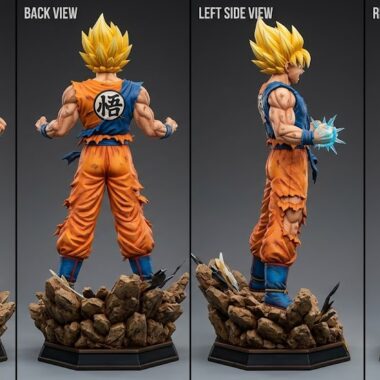
Customizing Dragon Ball Z (DBZ) figures is a transformative hobby that allows you to breathe new life into mass-produced collectibles. Whether you are looking to repaint a budget-friendly prize figure to look like a high-end resin statue, or you want to create a custom “Super Saiyan” aura effect, this project is perfect for fans who want to add a personal touch to their collection.
This guide is designed for the intermediate hobbyist. While no prior professional art experience is required, a steady hand and patience are essential. You will be working with miniature surfaces, meaning precision is key.
Complete Tools List:
- Hobby Knife (X-Acto): For removing mold lines or excess plastic.
- Fine-Tip Paint Brushes: Sizes 000, 0, and 1 (synthetic bristles work best).
- Masking Tape: Low-tack painter’s tape for protecting areas you don’t want to paint.
- Airbrush (Optional but recommended): For smooth, professional-grade base coats and shading.
- Sandpaper: Grit levels 400, 800, and 1200.
- Small Pliers/Tweezers: For disassembling figures.
Materials Needed:
- Acrylic Model Paints: Brands like Vallejo or Citadel are industry standards.
- Primer: A high-quality spray primer (Grey or White).
- Clear Coat: Matte, Satin, or Gloss finish sprays to protect your work.
- Isopropyl Alcohol (90%): For cleaning the figure and thinning paints.
Estimated Time and Cost:
- Time: Expect to spend 10–15 hours over a weekend, including drying times.
- Cost: If you already own basic tools, the project costs roughly $40–$60 for paints and primers. If starting from scratch, budget $100–$150.
Preparation and Planning
Before you touch your figure, you must treat your workspace as a laboratory. Preparation is 90% of the success in figure customization.
Workspace Setup
Clear a dedicated space with excellent lighting. A “daylight” LED desk lamp is crucial; it prevents color distortion so you don’t end up with a Super Saiyan Goku that looks neon yellow instead of golden. Lay down a cutting mat to protect surfaces. Ensure the room is well-ventilated, especially if you are using spray primers or clear coats.
Safety Precautions
- Ventilation: Always wear a respirator or mask when spraying primer or clear coats. These fumes are toxic.
- Skin Protection: Use nitrile gloves to prevent skin oils from interfering with paint adhesion.
- Eye Protection: Use safety goggles when cutting with hobby knives or sanding.
Pre-work Requirements
Never paint a figure straight out of the box. Factory-produced figures often have a thin layer of mold-release agent (silicone) on the surface, which prevents paint from sticking. You must wash your figure in warm, soapy water using dish soap and a soft toothbrush. Let it air dry for at least 24 hours.
Planning Tips
Don’t dive in blindly. Take a photo of your figure and use a photo editing app (or a printout and markers) to map out your color scheme. Decide if you are doing a “cell-shaded” look (bold, anime-style lines) or a “realistic” look (smooth gradients and shadows). Research reference images from the Dragon Ball manga or anime to ensure your color palette is accurate to the source material. Remember: it is easier to darken a light color than to lighten a dark one. Start with your base layers and work toward your highlights.
Step 1: Disassembly and Surface Preparation
To achieve a professional look, you must treat the figure as a collection of parts rather than a single statue.
Instructions
- Heat the Figure: DBZ figures are often made of PVC. To disassemble, soak the figure in hot (not boiling) water for 3–5 minutes. This softens the plastic, allowing you to pop off limbs or heads without breaking pegs.
- Sanding: Use your 400-grit sandpaper to remove “seam lines”—the ugly ridges left over from the manufacturing mold. Once the heavy ridges are gone, use 800 and 1200 grit to polish the surface back to a smooth finish.
- Priming: Once the figure is clean and dry, apply a thin, even coat of primer. Hold the spray can 8–10 inches away and use sweeping motions. Do not hold the spray in one spot, or you will lose fine details like Goku’s muscle definition or Vegeta’s armor creases.
Tips and Tricks
- The “Pinning” Technique: If you need to reattach parts, drill a tiny hole into both sides of the joint and insert a piece of a paperclip with superglue. This creates a much stronger bond than glue alone.
- Avoid Over-Priming: Too much primer fills in the intricate details of the hair and face. Use multiple thin coats rather than one thick one.
Common Mistakes
- Skipping the wash: If you don’t remove the factory oils, your paint will peel off within weeks.
- Ignoring the seam lines: These are the biggest giveaways of a “custom” job. Take the time to sand them down; it makes the figure look like a high-end garage kit.
Visual Descriptions
The figure should look uniform in color (usually grey or white) after priming. All shiny factory plastic should be gone, replaced by a matte, textured surface that is ready to “grab” the paint.
Checkpoint: Ensure all limbs are removable and the surface is completely matte before proceeding.
Step 2: Base Coating and Layering
This is where your character comes to life. We will apply the foundational colors to the figure.
Instructions
- Base Layers: Start with the largest areas first (e.g., the orange of Goku’s gi or the blue of Vegeta’s undersuit). Use a slightly thinned-down acrylic paint. You want the consistency of whole milk.
- Thinning: Never use paint straight from the bottle. Add a drop of water or airbrush thinner. Multiple thin layers are always better than one thick, gloopy layer.
- Blocking In: Paint the large sections first, then move to smaller details like skin tones and hair. Don’t worry about shading yet; just focus on getting clean, opaque coverage.
Tips and Tricks
- Use a Wet Palette: This keeps your acrylic paints from drying out while you work. You can make one by putting a wet paper towel inside a Tupperware container and placing parchment paper on top.
- The “Shadow” Map: If you are doing cell-shading, use a fine-tip pencil to lightly sketch where the shadows should be before painting them.
Common Mistakes
- Working too fast: If you paint over a layer that isn’t fully dry, you will pull up the paint underneath, creating a textured, “bumpy” mess.
- Using cheap brushes: Invest in at least one high-quality synthetic brush. Cheap brushes lose bristles that will get stuck in your wet paint.
Visual Descriptions
Your figure should look like a “flat” version of the character—clean, solid colors without much depth. If you are painting Super Saiyan hair, it should look like a vibrant, solid block of yellow.
Checkpoint: Hold the figure under a strong light. If you see streaks or see the primer underneath the paint, apply one more thin coat.
Step 3: Shading, Highlighting, and Detailing
This is the “magic” step where you add the anime aesthetic that makes DBZ figures pop.
Instructions
- Washing: Create a “wash” by mixing a darker version of your base color with a lot of water (or a dedicated wash medium). Apply this to the crevices (like the abs or under the collar). The pigment will settle into the cracks, creating natural-looking shadows.
- Dry Brushing: Take a lighter version of your base color, dip a dry brush in it, and wipe almost all the paint off onto a paper towel. Gently brush over the raised areas (like the tops of the muscles). This highlights the anatomy.
- Eyes and Face: Use your 000 brush for the eyes. This is the most difficult part. If you struggle, use a fine-point Micron pen to draw the pupils.
Tips and Tricks
- The “Cell-Shade” Line: If you want that crisp Dragon Ball Z anime look, use a thin brush with black ink or paint to outline the muscle groups and hair spikes. Keep the lines consistent in thickness.
- Contrast is Key: Don’t be afraid of dark shadows. Anime art relies on high contrast to define the characters.
Common Mistakes
- Over-washing: If you put too much wash on, the figure will look “dirty” rather than “shaded.” Use a clean brush to dab away any excess liquid immediately.
- Shaky hands: Rest your elbows on your table to stabilize your hands. If you are struggling with fine details, try holding your breath for a second while you make the stroke.
Visual Descriptions
The figure should now look three-dimensional. The muscles should look toned, the hair should have depth, and the eyes should have life. It should look like a character that jumped straight out of the screen.
Checkpoint: Ensure all lines are crisp and the shading looks intentional. If you made a mistake, you can usually wipe it off with a damp Q-tip if the paint is still wet.
Troubleshooting Common Issues
Even the pros run into trouble. Here is how to fix the most common mishaps.
Problem 1: The “Orange Peel” Effect.
This happens when your primer or clear coat is applied too thickly or in high humidity. The surface looks bumpy.
* Solution: Let it cure for 24 hours, then gently sand the surface with 1200-grit sandpaper until smooth. Wipe clean and re-apply a very thin, controlled coat.
Problem 2: Paint “Clogging” Details.
You applied the paint too thick, and now Goku’s hair spikes look rounded instead of sharp.
* Solution: If the paint is still wet, use a clean, damp brush to wipe it away. If it’s dry, use your hobby knife to very carefully scrape away the excess paint from the edges to restore the sharp silhouette.
Problem 3: Paint Rubbing Off at Joints.
Since you disassembled the figure, the paint on the joints rubs off when you move them.
* Solution: This is a common issue with articulated figures. Sand down the ball joints slightly before painting to create “clearance.” After painting, apply a thin layer of clear nail polish to the joint to create a hard, protective shell.
When to seek professional help:
If you have accidentally melted the plastic with a harsh chemical or broken a delicate limb that won’t hold with a pin, it may be time to look into specialized “figure repair” communities online. Don’t throw it away—even broken figures can be used for “battle-damaged” dioramas.
Final Touches and Maintenance
You have reached the finish line. Your custom figure is almost ready for display.
Finishing Steps
Once the paint is fully cured (give it at least 24 hours), apply a protective clear coat. If you want a classic anime look, use a Matte Clear Coat. This removes the “plastic” shine and gives it a professional, high-end resin appearance. If you want a “wet” or “battle-damaged” look, you can selectively apply a Gloss Coat to areas like eyes, sweat, or armor.
Quality Check Procedures
- The 360-degree test: Rotate the figure slowly under a bright light. Look for any missed spots or uneven shading.
- The “Shake” test: Give the figure a gentle shake to ensure all joints are secure and nothing rattles.
- The Detail check: Ensure the eyes are symmetrical. If one eye is slightly higher than the other, it can make the character look surprised or angry.
Maintenance Tips
- Dusting: Use a soft, natural-hair makeup brush to dust your figure once a month. Avoid feather dusters, as they can snag on delicate spikes or accessories.
- Sunlight: Keep your figure away from direct sunlight. Even the best acrylic paints will fade over time if exposed to UV rays.
- Temperature: Keep your figures in a climate-controlled room. Extreme heat can cause the PVC to soften, which might cause your figure to “lean” or lose its pose over time.
Enhancement Suggestions
To take your project to the next level, consider building a small diorama base. Use foam board to create a rocky terrain (like Namek or the Hyperbolic Time Chamber). You can use cotton balls painted with a bit of yellow and white to create a custom “energy aura” around the figure’s feet. These small environmental additions elevate a simple figure into a museum-quality display piece that truly honors the legacy of Dragon Ball Z. You have successfully transformed a mass-produced item into a piece of art—enjoy your new, one-of-a-kind collection centerpiece!