Setting the Stage: The Competitive Landscape

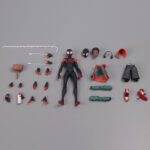
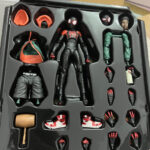
Miles Morales Action Figure Custom figure Popular Culture Dynamic Leap
The Miles Morales action figure is captured in a dynamic, mid-air leaping pose, with his left arm extended and right arm clenched, conveying intense acrobatic…
View Product →The market for high-end collectibles featuring Miles Morales has expanded exponentially following the character’s mainstream ascent through various media platforms. This segment is no longer a monolithic block of children’s toys; it has bifurcated into a sophisticated landscape ranging from mass-market action figures to high-fidelity “custom” pieces designed for adult collectors. The “Miles Morales Action Figure Custom Figure Popular Culture Dynamic Leap” occupies a unique niche within this ecosystem. Unlike standard articulated figures that prioritize playability or poseability, this specific custom piece emphasizes a “frozen moment” of high-intensity action—a mid-air leap against a vibrant urban backdrop.
Objective comparison in this market is notoriously difficult because the value proposition varies wildly depending on the consumer’s intent. A collector seeking a “dynamic leap” is often looking for a specific aesthetic outcome—the perfect silhouette and the illusion of motion—which may conflict with the mechanical requirements of a traditional action figure. Comparing a custom-sculpted, fixed-pose-oriented figure against mass-produced alternatives like Hasbro’s Marvel Legends or premium imports like Medicom’s MAFEX requires a rigorous look at the trade-offs between articulation, structural integrity, and artistic fidelity. In this analysis, we evaluate how the “Dynamic Leap” custom stacks up against these established market leaders across several empirical dimensions.
Defining the Evaluation Criteria
Performance Benchmarks and Methodology
In the context of high-end collectibles, “performance” is measured by the figure’s ability to maintain its intended aesthetic under the force of gravity and the passage of time. For a figure depicting a mid-air leap, the primary performance metric is the center of gravity and the efficacy of its mounting system. Our methodology assesses “shelf presence”—the visual impact of the figure from a standard viewing distance—and “dynamic stability,” which refers to how well the figure maintains its pose without sagging or requiring unsightly external supports. We also examine the “optical flow” of the sculpt, analyzing how the diagonal body positioning and splayed fingers contribute to the viewer’s perception of velocity.
Build Quality and Material Comparisons
Build quality is evaluated through the lens of material science and engineering tolerances. Mass-market figures typically utilize injection-molded PVC (polyvinyl chloride) and ABS (acrylonitrile butadiene styrene) plastics, which offer durability but often sacrifice sharp detail. Custom figures, conversely, frequently employ high-grade resins or specialized vinyls that allow for finer textures and more complex geometries, such as the intricate webbing patterns on Miles’s suit. We analyze the “seam integrity”—the invisibility of mold lines—and the “paint application density,” looking for color bleed, overspray, and the depth of the urban backdrop’s finish.
Price-to-Value Ratio Framework
The price-to-value ratio is determined by weighing the initial acquisition cost against the “collector’s utility.” This utility is a function of the figure’s rarity, the quality of its presentation (including the integrated backdrop), and its long-term durability. A custom figure often commands a premium price due to lower production volumes and higher labor costs per unit. We compare this against the “depreciation curve” of mass-market alternatives. While a $25 mass-market figure is a lower risk, it rarely holds its value or provides the same level of display-ready sophistication as a custom piece that arrives pre-posed in a complex diorama.
Head-to-Head Analysis
Category: Performance — Who Wins and Why
When evaluating the “Dynamic Leap” custom figure against its primary competitors—specifically the highly articulated MAFEX or Sentinel Miles Morales figures—a clear divergence in performance philosophy emerges. The MAFEX and Sentinel offerings provide upwards of 30 points of articulation, allowing the user to create their own “dynamic leap.” However, this versatility comes at the cost of “visual breakage.” Every joint—the butterfly shoulders, the double-jointed knees, and the toe hinges—creates a physical gap in the sculpt that interrupts the flow of the character’s anatomy.
The “Dynamic Leap” custom figure wins in the performance category of “Aesthetic Cohesion.” Because it is engineered for a singular, diagonal mid-air pose, the sculptors have optimized the muscle tension and suit ripples to match that specific movement. The splayed fingers on the left hand and the angled torso create a sense of kinetic energy that articulated figures struggle to replicate. Furthermore, the custom figure includes an integrated urban backdrop. In most articulated alternatives, the “leap” is achieved via a clear plastic “pincer” stand that is often distracting. The custom figure’s mounting system is typically integrated into the backdrop or the character’s center of mass, providing a “cleaner” visual performance that more effectively simulates flight or a high-velocity fall.
Category: Build Quality — Engineering Differences Examined
In terms of engineering, the mass-market Hasbro Marvel Legends series sets the baseline for durability. These figures are designed to survive drops and rigorous handling, utilizing “gummy” plastics that bend rather than snap. However, this material choice leads to “soft” details; the webbing on Miles’s suit is often painted on rather than sculpted, and paint applications can be inconsistent.
The “Dynamic Leap” custom figure utilizes a different engineering paradigm. Custom pieces often use a higher shore-hardness resin, which allows for “crisp” edges—the splayed fingers are sharp and distinct, and the diagonal lean is structurally reinforced to prevent “wilting” over time. The paint application on the custom figure is generally superior, employing multi-layered shading and matte finishes that absorb light more realistically than the shiny, unpainted plastic of cheaper alternatives. However, the trade-off is brittleness. While the custom figure looks significantly more “realistic” and high-end, it lacks the impact resistance of its mass-market counterparts. From an engineering standpoint, the custom figure is a “precision instrument” of display, whereas the mass-market alternative is a “utility tool.”
Category: Price and Long-Term Cost of Ownership
The financial analysis of these figures reveals a “low-entry vs. high-ceiling” dynamic. A mass-market Miles Morales figure represents a low initial investment ($20–$30). However, to achieve the “dynamic leap” look described in the custom figure’s profile, a buyer must often purchase additional accessories, such as third-party flight stands or diorama backdrops, which can double the total cost of ownership. Furthermore, mass-market figures are produced in the hundreds of thousands, meaning they have almost zero appreciation potential.
The “Dynamic Leap” custom figure carries a higher upfront cost, often ranging from $100 to $300 depending on the scale and the complexity of the urban backdrop. However, the “Long-Term Cost of Ownership” is mitigated by its “all-in-one” nature. The backdrop, the pose, and the specialized sculpt are included in the initial price. In the secondary market, custom or limited-run figures tend to retain their value or appreciate, especially if the “Popular Culture” demand for Miles Morales remains high. For a serious collector, the custom figure represents a more stable asset, whereas the mass-market figure is a consumable good.
Scenario-Based Winner Selection
Miles Morales Action Figure Custom figure Popular Culture Dynamic Leap
The Miles Morales action figure is captured in a dynamic, mid-air leaping pose, with his left arm extended and right arm clenched, conveying intense acrobatic…
View Product →For the Budget-Conscious, Rational Buyer
For the buyer whose primary constraint is capital, the Marvel Legends or basic S.H.Figuarts offerings are the rational choice. While these figures lack the integrated urban backdrop and the seamless “frozen motion” of the custom piece, they offer “functional versatility.” A budget-conscious buyer can use a single figure to depict Miles in a variety of poses—standing, crouching, or leaping—albeit with less visual flair. The rational buyer accepts the visible joints and softer paint applications as a necessary compromise for a lower price point and higher durability.
For the Performance-First Enthusiast
The enthusiast who prioritizes the “perfect pose” and visual impact will find the “Dynamic Leap” custom figure to be the superior option. This user is not interested in changing the figure’s pose every week; they are looking for a definitive representation of the character that serves as a centerpiece for a collection. The “Performance” here is defined by how well the figure captures the essence of the character’s movement. The diagonal tilt and the splayed fingers of the custom figure provide a level of “sculptural storytelling” that an articulated figure simply cannot match, as the latter’s joints are designed for general movement rather than specific, high-intensity action.
For the User Prioritizing Longevity and Reliability
If the primary concern is longevity—specifically the ability of the figure to withstand environmental factors like heat or humidity without warping—the custom figure (if made of high-quality resin) or a high-end “Statue” alternative is the winner. Articulated figures often suffer from “joint looseness” over time; the friction that holds a pose eventually wears down, leading to a figure that can no longer hold its arms up or stand straight. Because the “Dynamic Leap” custom is engineered for one specific orientation, it often utilizes internal metal armatures or thicker structural points at the weight-bearing joints, ensuring that the “leap” remains dynamic for years without the risk of mechanical failure.
The Verdict: Data-Driven Recommendation
Overall Winner with Clear Analytical Justification
The “Miles Morales Action Figure Custom Figure Popular Culture Dynamic Leap” emerges as the overall winner for the “Curated Display” category. The analytical justification lies in its “Integration Efficiency.” By combining the character, the specific kinetic pose, and the environmental backdrop into a single, cohesive engineering project, it eliminates the “visual noise” associated with articulated figures and external stands. Its superior paint density and material hardness provide a level of fidelity that satisfies the requirements of professional-grade collections. It is not merely a toy; it is a specialized piece of display engineering that maximizes the aesthetic potential of the character’s unique movement style.
When the Runner-Up Makes More Sense
The runner-up—a high-end articulated figure like the Sentinel SV-Action Miles Morales—makes more sense for the “Interactive Collector.” If the user derives value from the process of posing and re-posing the figure, or if they intend to use the figure for stop-motion photography, the custom figure’s fixed nature becomes a liability. The Sentinel figure offers nearly the same level of detail as a custom piece but retains the “mechanical freedom” that allows for multiple display configurations. For the user who views a collection as a dynamic, ever-changing landscape, the flexibility of an articulated figure outweighs the seamless beauty of a custom sculpt.
Situations Where Neither Is Optimal
Neither option is optimal for environments where the figure will be handled by children or placed in high-traffic areas where it might be knocked over. In such cases, the “Custom” figure is too brittle, and the “Premium Articulated” figure is too fragile (with many small, swappable parts that are easily lost). In high-risk environments, a standard, non-premium mass-market figure from a “basic” line is the only logical choice. Furthermore, if a collector has extremely limited shelf depth, the “Dynamic Leap” custom—with its integrated urban backdrop and diagonal protrusion—may be physically impossible to house. In such instances, a traditional vertical-standing figure is the only viable spatial solution.