Why This Purchase Decision Is More Complex Than It Appears
Hulk Action Figure Custom Statue Marvel Angry Hooded Stance
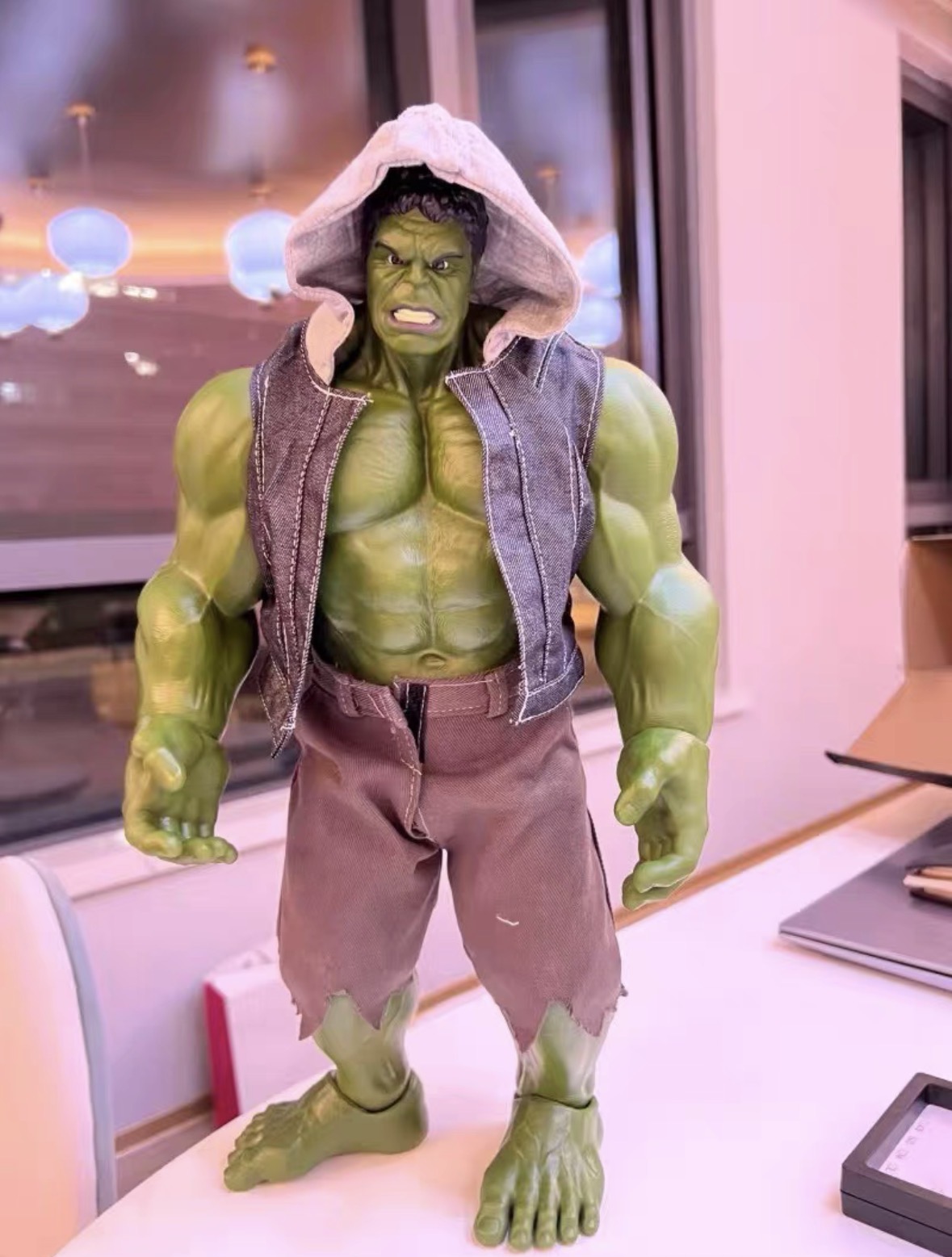
This Hulk action figure is presented in a powerful standing pose, emanating raw anger through its intensely furrowed brow and gritted teeth. His muscular green…
View Product →Acquiring a high-end custom statue, such as the Hulk in an angry hooded stance, represents a significant departure from purchasing mass-market action figures. While a standard toy is designed for tactile play and durability, a custom statue is an engineering project focused on aesthetic permanence, anatomical precision, and material integrity. The complexity of this decision lies in the “custom” nature of the product. Unlike licensed products from major conglomerates, custom statues are often produced by independent studios in limited runs. This introduces variables in quality control, material composition, and long-term structural stability that the average consumer may not anticipate. Furthermore, the specific “hooded” design adds a layer of complexity regarding shadows and lighting; a hood can obscure the very facial details—the furrowed brows and gritted teeth—that define the piece’s value. Buyers must navigate the trade-offs between artistic expression and the physical realities of large-scale resin or polystone collectibles.
The Critical Evaluation Framework
Performance Specifications That Actually Matter
When evaluating a statue of this magnitude, “performance” is measured by visual impact and structural engineering. The first specification to analyze is the scale and footprint. A “powerful, standing pose” with feet apart suggests a wide base, which is beneficial for stability but requires significant shelf depth. Prospective buyers should look for the exact dimensions, particularly the depth from the back of the heel to the furthest protruding muscle or garment.
The “tension” described in the musculature is not merely an artistic choice; it is a test of the sculptor’s understanding of human (or superhuman) anatomy. In high-end statues, this is measured by the accuracy of secondary and tertiary muscle groups. For a Hulk figure, the transition between the trapezius and the hooded garment is a critical failure point; if the hood does not sit naturally against the musculature, the illusion of weight is lost. Additionally, the “angry” facial expression requires high-fidelity casting. If the gritted teeth are not individualistically defined, the piece can suffer from “soft” detailing, which significantly diminishes its value in the secondary market.
Build Quality and Material Science Considerations
The materials used in custom statues generally fall into three categories: PVC, Resin, and Polystone. For a “Custom Statue,” Polystone is the industry standard for premium pieces. It is a cold-cast resin mixed with powdered stone additives, providing the weight and “cold-to-the-touch” feel of real stone. However, Polystone is inherently brittle. The stance of the Hulk—feet slightly apart—creates a center of gravity that must be perfectly balanced. If the internal armature (the “skeleton” of the statue, usually made of steel or thick wire) is insufficient, the statue may develop a “lean” over several years due to the effects of gravity on the heavy upper torso.
The paint application is the second pillar of build quality. For a character like the Hulk, a flat green paint is unacceptable. A high-quality custom piece will utilize multi-layered “skin” tones, including sub-dermal shading (purples and blues beneath the green) to simulate veins and muscle depth. The hooded garment introduces a “mixed media” question: is the hood sculpted polystone or real fabric? Sculpted hoods offer consistency but can look “plasticky,” while real fabric (tailored soft goods) adds realism but is a magnet for dust and can degrade if not treated with UV-protectant sprays.
Ecosystem Compatibility and Long-Term Support
While “software support” is a term usually reserved for electronics, in the world of high-end collectibles, it translates to the “Information and Authenticity Ecosystem.” A custom statue lacks the backing of a major corporate customer service department. Therefore, the “support” comes from the provenance of the piece. Does the statue come with a Certificate of Authenticity (COA)? Is there a digital record or a serial number etched into the base?
Furthermore, the “ecosystem” involves how the piece fits into a wider collection. The “hooded” aesthetic is a specific stylistic choice—often referred to as “Old Man Logan” style or “Gladiator” style. Buyers must consider if this stylistic outlier will clash with more traditional “comic-book accurate” pieces in their display. Long-term support also includes the availability of replacement parts. Because custom runs are small, if a finger or a tooth chips, the “software” here is the community and the studio’s reputation for providing replacement parts or repair guides.
Dissecting the Budget Tiers
Entry-Level: What You Sacrifice and What You Gain
Entry-level versions of a hooded Hulk are typically mass-produced PVC figures. In the $50 to $150 range, you gain durability. These figures can survive a fall from a shelf and are easy to clean. However, you sacrifice the “tension” and “presence” of a statue. PVC cannot hold the same level of sharp detail as resin; the furrowed brows will be less deep, and the paint will likely be a simple factory-applied coat with minimal shading. The “hood” in this tier is almost always molded plastic, which can look bulky and fail to drape naturally over the shoulders.
Mid-Range: The Engineering Sweet Spot Explained
The $300 to $600 range is where we find licensed resin statues from established companies. Here, the engineering is standardized. You are paying for a guaranteed level of quality control and a base that is weighted to prevent tipping. The musculature will be anatomically grounded, and the “angry” expression will be crisp. The sacrifice in this tier is often exclusivity. These pieces are produced in the thousands, meaning their value is unlikely to appreciate significantly. The “hooded stance” in this tier will be well-executed but perhaps “safe” in its artistic interpretation to appeal to the widest possible audience.
Premium: When the Price Premium Is Justified by Data
Premium custom statues, often exceeding $1,000, are justified by “Edition Size” (ES) and “Mixed Media” complexity. A custom statue with an ES of 50 or 100 is a rare piece of art. The justification for the price premium is found in the hand-painted details—individual capillaries visible in the eyes, sweat sheen on the skin, and high-quality tailored fabric for the hood with internal wires for posing. Data shows that low-ES custom pieces from reputable “private” studios often maintain or increase their value, whereas mass-market pieces depreciate. At this level, you are not just buying a figure; you are buying a limited-run sculpture.
Common Buyer Mistakes — and How to Avoid Them
Hulk Action Figure Custom Statue Marvel Angry Hooded Stance
This Hulk action figure is presented in a powerful standing pose, emanating raw anger through its intensely furrowed brow and gritted teeth. His muscular green…
View Product →Specification Traps That Look Good on Paper
A common mistake is over-valuing “Total Weight.” While a heavy statue feels premium, excessive weight in the upper torso without a corresponding counterweight in the base is a recipe for structural failure. Buyers should look for “Base-to-Torso Weight Ratios.” Another trap is the “1:4 Scale” label. There is no universal standard for scale in custom statues; one studio’s 1:4 Hulk may be 24 inches tall, while another’s is 30 inches. Always measure your actual shelf clearance rather than relying on the stated scale.
Marketing Language vs. Measurable Performance Differences
Marketing copy often uses terms like “Museum Quality” or “Masterpiece Edition.” These are subjective and legally meaningless. Instead, look for measurable descriptors. “Hand-tailored fabric with wire inserts” is a measurable performance feature that allows you to control the “hooded” look. “Translucent resin skin” is a technical specification that indicates a higher level of realism, as it allows light to penetrate the surface of the “skin” much like real human tissue. Avoid being swayed by adjectives; look for the nouns and verbs that describe the manufacturing process.
The Decision Framework: Matching Product to Buyer Profile
Questions to Clarify Before Committing
Before clicking “purchase,” the consumer must answer three critical questions regarding their environment and intent. First: “What is my lighting strategy?” A hooded statue creates deep shadows over the face; if your display case does not have bottom-up lighting or adjustable spotlights, the “intensely angry expression” may be lost in total darkness. Second: “Is this a centerpiece or a filler?” The Hulk’s “feet slightly apart” stance demands significant lateral space. Third: “What is my risk tolerance for breakage?” If you live in an earthquake zone or have a high-traffic household, a brittle Polystone custom statue is a high-risk investment compared to a high-end PVC or vinyl alternative.
Red Flags to Watch for in Product Listings
When viewing a listing for a custom Hulk statue, certain red flags should trigger immediate caution. The most prominent is the use of 3D renders instead of “Production Piece” photography. A render shows the artist’s intent, not the factory’s output. If the listing does not show the actual painted physical product, the final result may have “muddy” paint or loss of detail in the “furrowed brows.”
Another red flag is the absence of “Shipping Weight” and “Box Dimensions.” For a statue of this size, shipping can cost hundreds of dollars. If a seller is vague about these specs, you may be hit with unexpected costs or, worse, the item may be inadequately packed for its weight. Finally, be wary of “Unlicensed” tags that do not name the studio. While many custom statues are unlicensed, the reputable ones still come from known entities (e.g., “XM Studios,” “Queen Studios,” or specific reputable private groups) with track records you can research.
Final Checklist Before Purchase
- Dimensional Verification: Confirm the height, width, and depth. Ensure the “hooded” peak doesn’t exceed your shelf height.
- Material Confirmation: Is it Polystone, Resin, or PVC? Note that “Cold Cast Resin” is often a marketing term for Polystone.
- Anatomy Check: Examine the photos of the “tension” in the legs. Are the quadriceps and calves anatomically correct for the weight they are supporting?
- Paint Depth: Look for evidence of “wash” and “dry brushing.” The green skin should have multiple tones, not a single flat color.
- Hood Mechanics: Determine if the hood is removable or adjustable. A fixed hood limits display options.
- Provenance: Verify the Edition Size and the inclusion of a Certificate of Authenticity.
- Shipping Insurance: Ensure the seller provides full-value insurance, as the Hulk’s protruding muscles and the edges of a hooded garment are highly susceptible to “snapping” during transit.
By applying this analytical framework, the consumer moves from an emotional purchase based on “cool factor” to a rational investment in a piece of high-end figurative art. The Hulk Angry Hooded Stance is a powerful aesthetic statement, but its value is entirely dependent on the intersection of material science, anatomical accuracy, and structural integrity.