Why This Purchase Decision Is More Complex Than It Appears

Miles Morales Action Figure Custom figure Popular Culture Dynamic Leap
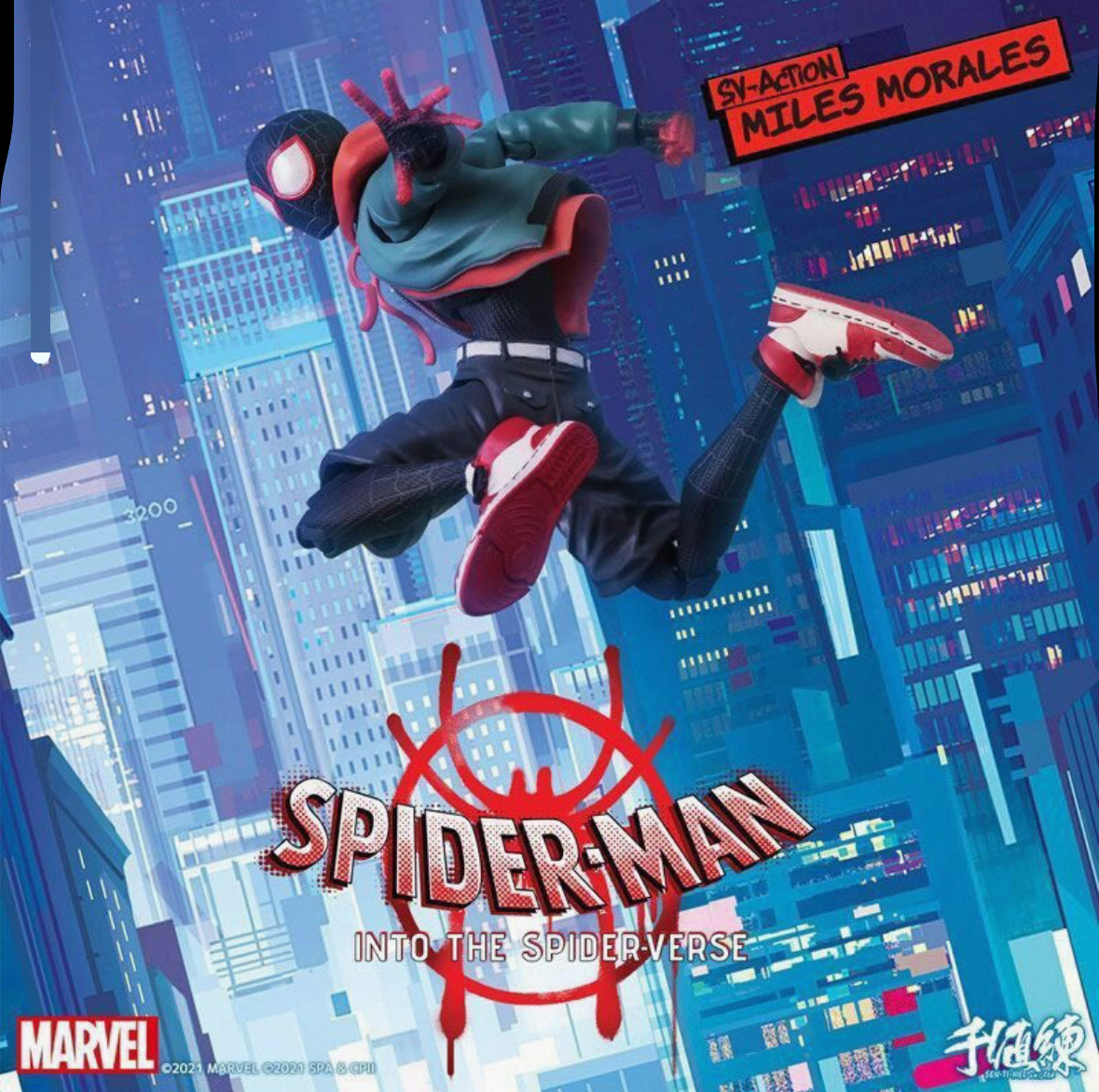
The Miles Morales action figure is captured in a dynamic, mid-air leaping pose, with his left arm extended and right arm clenched, conveying intense acrobatic…
View Product →At first glance, acquiring an action figure of Miles Morales in a “Dynamic Leap” pose seems like a straightforward aesthetic choice. However, for the discerning collector or the consumer seeking long-term value, this specific product category involves a complex intersection of structural engineering, material science, and intellectual property nuances. The “Dynamic Leap” is not merely a visual style; it is a mechanical challenge. Figures frozen in mid-air poses must contend with gravity, center-of-mass distribution, and the long-term fatigue of the materials used to support them.
Furthermore, the term “custom figure” adds a layer of volatility to the purchase. Unlike mass-produced figures from global conglomerates, custom or boutique figures often vary significantly in their manufacturing standards, paint durability, and the toxicity of the resins or plastics used. A buyer must evaluate whether they are purchasing a durable piece of articulated art or a brittle, top-heavy sculpture that may succumb to “shelf-dive” or joint failure within months. Understanding the hidden variables of weight distribution, scale accuracy, and material composition is essential to making an informed investment.
The Critical Evaluation Framework
Performance Specifications That Actually Matter
When evaluating a figure depicted in a mid-air leaping pose, the most critical specification is the “Center of Gravity (CoG) Stability.” Because the Miles Morales figure is angled diagonally to convey motion, the weight is not distributed vertically over the base. A high-quality figure will have been engineered so that the mounting point—usually a transparent rod or a structural element of the “city backdrop”—is positioned at the figure’s exact balance point. If the mounting point is too low or too high relative to the torso, the figure will exert constant torque on the connection, leading to eventual snapping or permanent warping of the plastic.
Another vital performance metric is “Joint Friction Tolerance.” For articulated figures, the “Dynamic Leap” requires the joints (shoulders, hips, and neck) to hold a specific tension against the force of gravity. In lower-quality models, “joint flu” or loosening occurs because the plastic-on-plastic friction is insufficient to hold the weight of the limbs in an outstretched position. Buyers should seek specifications regarding the type of joints used; ball-and-socket joints are common, but ratcheted or “clicky” joints are superior for maintaining heavy, acrobatic poses over long periods.
Build Quality and Material Science Considerations
The material composition of a Miles Morales figure determines both its visual fidelity and its longevity. Most high-end figures utilize a combination of PVC (Polyvinyl Chloride) for the body and ABS (Acrylonitrile Butadiene Styrene) for the structural components. PVC is preferred for the sculpt because it allows for fine detail, such as the texture of the “Spider-Verse” suit, but it is susceptible to “leaning” if the ambient temperature rises. If the figure is intended for a permanent dynamic pose, the inclusion of an internal wire armature or high-grade ABS in the legs is a significant indicator of quality.
Paint application is the second pillar of build quality. In a “vibrant city backdrop” scenario, the figure is often subjected to complex lighting environments. Objective quality is measured by the use of “matte versus gloss” finishes to differentiate between the fabric of the suit and the lenses of the mask. Furthermore, a “custom” figure should be inspected for paint rub—the tendency of paint to flake off at the joints during posing. High-quality manufacturers utilize a “molded-in-color” process for base layers, with secondary details applied via pad printing or airbrushing, followed by a UV-resistant clear coat to prevent fading from sunlight exposure.
Ecosystem Compatibility and Long-Term Software Support
While “software support” is traditionally associated with electronics, in the world of high-end collectibles, it translates to “System Support”—the availability of replacement parts, modular accessories, and base compatibility. A Miles Morales figure is rarely a standalone purchase; it usually exists within a 1/12 (6-inch) or 1/6 (12-inch) scale ecosystem.
Compatibility with third-party display systems (such as flight stands or modular diorama walls) is a major factor. A “custom” figure that uses a proprietary, non-standard peg size for its base limits the buyer’s ability to integrate the figure into a larger urban landscape display. Furthermore, buyers should investigate the “aftermarket ecosystem” for the brand. Does the manufacturer offer a replacement program for broken joints? Is the figure part of a wider series where the city backdrops can be connected to form a larger panorama? An isolated product with no ecosystem compatibility often suffers from lower resale value and limited display versatility.
Dissecting the Budget Tiers
Entry-Level: What You Sacrifice and What You Gain
Entry-level figures, typically priced between $20 and $35, are designed for mass-market durability and playability. In this tier, the “Dynamic Leap” is usually achieved through a basic plastic stand and limited articulation. The primary gain here is “ruggedness.” These figures are made of softer, more pliable plastics that can survive a fall from a shelf.
However, the sacrifices are significant. The “vibrant city backdrop” is often a simple cardboard insert or a flat, unpainted plastic mold. The paint application is frequently “flat,” meaning there is no shading or highlighting to emphasize the musculature of the character. Most importantly, the “dynamic” nature of the pose is limited by the sculpt; the figure may look good from one specific angle but appear awkward or “broken” from the side due to the limitations of budget engineering.
Mid-Range: The Engineering Sweet Spot Explained
The mid-range tier ($80 to $160) is where the “Engineering Sweet Spot” resides. Figures in this category—often produced by specialized Japanese or boutique Western labels—prioritize “anatomical accuracy” and “hyper-articulation.” Here, the Miles Morales figure will likely feature over 30 points of articulation, allowing the user to fine-tune the “leaping” pose to a degree of millimetric precision.
In this tier, the city backdrop is usually a three-dimensional diorama piece with realistic textures (brick, glass, steel). The use of sophisticated materials like POM (Polyoxymethylene) in the joints ensures that the figure remains stiff and poseable for years. This is the recommended tier for the serious enthusiast who wants a balance between a “toy” and a “statue.” The primary trade-off is fragility; these figures are precision instruments and cannot withstand the rough handling associated with entry-level products.
Premium: When the Price Premium Is Justified by Data
Premium figures, costing $300 and upward, are often 1/6 scale or “Statue-Action Figure Hybrids.” At this price point, the “Dynamic Leap” is no longer just a pose; it is a centerpiece of mechanical art. The justification for this price premium is found in the “Mixed Media” construction. The suit may be made of actual tailored fabric with silk-screened patterns, and the city backdrop might feature integrated LED lighting to simulate the neon glow of a New York night.
Data shows that premium figures hold their value or appreciate over time, provided they are kept in a temperature-controlled environment. The “custom” aspect at this level often implies hand-painted details and limited production runs (e.g., 500 units worldwide). The engineering is vastly superior, often utilizing heavy die-cast metal parts in the base to ensure that the cantilevered weight of the leaping figure never causes the display to tip.
Common Buyer Mistakes — and How to Avoid Them
Miles Morales Action Figure Custom figure Popular Culture Dynamic Leap
The Miles Morales action figure is captured in a dynamic, mid-air leaping pose, with his left arm extended and right arm clenched, conveying intense acrobatic…
View Product →Specification Traps That Look Good on Paper
The most common trap is the “Articulation Count Myth.” A listing may boast “40+ points of articulation,” but if the sculpt of the suit or the bulk of the character’s limbs prevents those joints from moving past a 45-degree angle, the number is irrelevant. For a “Dynamic Leap” pose, the range of motion in the “butterfly joints” (shoulders) and the “ab-crunch” (mid-torso) is far more important than the total number of joints. A figure with 20 highly functional joints will always outperform a figure with 40 restricted ones.
Another trap is the “Scale Confusion.” Miles Morales is a teenager and is canonically shorter than Peter Parker. Some manufacturers produce “6-inch scale” figures that are actually 6.5 inches tall, making Miles look like a giant next to other characters in the same scale. Buyers should verify the actual height in centimeters rather than relying on the “1/12” or “6-inch” label.
Marketing Language vs. Measurable Performance Differences
Marketing copy often uses subjective terms like “vibrant,” “dynamic,” and “ultra-realistic.” A rational buyer should translate these into measurable attributes. “Vibrant” should be checked against the “Paint Opacity” and “Color Gamut”—does the red of the spider emblem pop against the black, or is it a dull, semi-transparent application where the black plastic bleeds through?
“Dynamic” should be evaluated by looking at the “Footprint-to-Height Ratio.” If the figure is in a leap, how much horizontal space does it occupy? A truly dynamic figure requires significant shelf depth. If a listing doesn’t provide the depth (Z-axis) dimensions of the backdrop and figure combined, the buyer risks purchasing an item that cannot fit into a standard display cabinet like an IKEA Detolf.
The Decision Framework: Matching Product to Buyer Profile
Questions to Clarify Before Committing
Before clicking “purchase,” the buyer must answer three fundamental questions:
1. What is the primary heat/light exposure of the display area? If the figure will sit in a room that reaches over 80°F (27°C) or is in direct sunlight, PVC-heavy figures in dynamic poses will eventually sag. A resin statue or a figure with a metal-supported base is required.
2. Is the intent “Static Display” or “Photography”? If the figure is for photography, articulation is king. If it is for a static shelf display, a “fixed-pose” statue or a figure with hidden joints (seamless body) will provide a more realistic aesthetic.
3. Does the “Custom” label refer to a modified mass-market figure or an original sculpt? Modified figures (custom-painted Hasbro models, for example) offer unique aesthetics but may have “paint rub” issues that original factory-produced figures do not.
Red Flags to Watch for in Product Listings
The presence of “Stock Photos Only” is the most significant red flag. If a listing for a “Custom Miles Morales” figure only uses images from the movie or promotional shots from a different high-end brand (like Hot Toys or Sentinel), the actual product is likely a low-quality bootleg. Demand “in-hand” photos that show the joint work and the texture of the city backdrop.
Another red flag is the “Weight Discrepancy.” A figure with a substantial “vibrant city backdrop” should have significant weight (typically over 500g for a 1/12 scale set). If the shipping weight is suspiciously low, the backdrop is likely thin plastic or cardboard, which will not provide the structural integrity needed to support a dynamic leaping pose.
Final Checklist Before Purchase
- Structural Integrity: Does the figure connect to the base via a screw-in bolt or a simple friction peg? (Bolts are preferred for dynamic poses).
- Material Check: Is the suit textured (sculpted) or just painted on? (Sculpted texture indicates a higher-quality mold).
- Scale Accuracy: Does the height in centimeters align with your existing collection?
- Backdrop Depth: Do you have at least 10–12 inches of shelf depth to accommodate the diagonal “leap” and the urban scenery?
- Joint Type: Are the primary weight-bearing joints (hips/ankles) made of a high-friction material or reinforced with metal?
- Return Policy: Does the seller offer a guarantee against “arrived broken” joints, which are common in the shipping of “custom” resin pieces?
By applying this analytical framework, a consumer moves from a purely emotional purchase based on a “cool” image to a calculated investment in a piece of pop-culture engineering that will maintain its aesthetic and structural integrity for years to come.