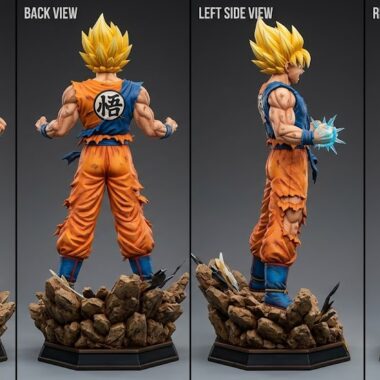
The Dragon Ball franchise, spanning over four decades of manga, anime, and cinematic history, has cultivated one of the most fervent collector bases in pop culture. Consequently, the market for Dragon Ball figures is a sprawling, multi-billion dollar ecosystem. From affordable, mass-produced PVC statues found in local game stores to high-end, limited-edition resin masterpieces that command thousands of dollars, the variety can be overwhelming for both novices and seasoned veterans.
Why does this comparison matter? Because the term “Dragon Ball figure” is an umbrella that covers vastly different manufacturing philosophies. Investing in a collection requires understanding the trade-offs between articulation, aesthetic accuracy, material durability, and long-term resale value. A buyer looking for a poseable action figure for photography has entirely different needs than a display-case collector seeking museum-quality centerpieces.
In this comprehensive guide, we are comparing the three titans of the industry: Bandai Spirits S.H. Figuarts, Banpresto (Bandai Spirits Ichibansho), and MegaHouse (Portrait of Pirates/Dragon Ball Gals/Desktop Real McCoy). These three represent the primary pillars of the collector market.
Our criteria for evaluation are as follows:
1. Sculpt Fidelity: How closely the figure captures Akira Toriyama’s iconic anatomy and facial expressions.
2. Material Quality: The durability of the plastics, paint application consistency, and resistance to “leaning” or warping.
3. Articulation/Customization: The range of motion and accessory variety.
4. Price-to-Value Ratio: The long-term investment viability and the quality provided per dollar spent.
5. Display Presence: The visual impact and scale consistency within a collection.
Whether you are a casual fan looking for a desk accessory or a serious investor curating a gallery, this objective breakdown will clarify which manufacturer aligns with your specific goals.
Option 1: Bandai Spirits S.H. Figuarts
S.H. Figuarts (SHF) occupies the premium space for articulated action figures. Unlike static statues, SHF figures are engineered for play and dynamic photography. They utilize sophisticated joint systems, including ball-jointed necks, butterfly shoulders, and multi-hinged knees, allowing for high-fidelity recreation of iconic combat stances from Dragon Ball Z and Dragon Ball Super.
Key Specifications:
* Scale: Typically 1/12 scale (approx. 5.5 to 6.5 inches).
* Material: ABS and PVC plastics.
* Accessories: Includes multiple interchangeable faces, hands, and energy effect parts.
* Joints: Proprietary 3.0 articulation system.
Strengths:
The primary strength of SHF is versatility. Because they are articulated, they don’t grow “stale” on a shelf; you can change their pose weekly. The facial sculpting is arguably the best in the 1/12 scale, often utilizing digital face-printing technology to capture the intensity of characters like Goku or Vegeta with uncanny accuracy. Furthermore, the ecosystem is vast, meaning you can stage massive battle scenes with dozens of characters that all scale perfectly with one another.
Weaknesses:
The greatest weakness is “joint fatigue.” Over time, the plastic friction points can loosen, leading to figures that struggle to hold heavy poses. Additionally, the seam lines required for articulation can sometimes break the visual illusion of a character, making them look less like a statue and more like a toy. They are also prone to paint transfer if posed too aggressively.
Best Use Cases:
SHF is the gold standard for toy photographers, stop-motion animators, and collectors who enjoy “fiddling” with their figures. If you want to recreate the Kamehameha struggle or Gohan’s transformation on your desk, this is the definitive choice.
Option 2: Banpresto (Ichibansho)
Banpresto, now under the Bandai Spirits umbrella, is the undisputed king of the “prize figure” market. Originally designed for Japanese crane machines, these figures have exploded into the global retail market. They offer a “what you see is what you get” experience—static, pre-posed statues that prioritize dynamic energy over articulation.
Key Specifications:
* Scale: Varied, typically ranging from 7 to 10 inches.
* Material: Primarily PVC (often harder, more durable plastics).
* Base: Fixed circular or hexagonal plastic stands.
* Production: Mass-produced, injection-molded.
Strengths:
The main draw here is affordability and volume. Banpresto figures allow collectors to amass a massive roster of characters—including obscure ones like Zarbon or Dodoria—without breaking the bank. The sculpting is surprisingly high-end for the price point. Artists often focus on a single, iconic “moment” (e.g., a specific punch or blast), resulting in figures that look highly cinematic. They are also incredibly sturdy; because they lack joints, there is very little maintenance required.
Weaknesses:
The paint jobs can be inconsistent. Because they are mass-produced, you may occasionally find “paint bleed” or minor scuffs. Furthermore, they are static. Once you place the figure on your shelf, that is the only way it will ever look. They lack the interchangeable parts that make SHF or MegaHouse figures feel like a complete “set.”
Best Use Cases:
Banpresto is the best choice for the “army builder.” If you want to fill an entire bookshelf with a diverse cast of characters from the Frieza Saga or the Tournament of Power, this is the most cost-effective path. They are perfect for casual fans or those on a budget.
Option 3: MegaHouse (High-End Statues)
MegaHouse represents the luxury tier. While Banpresto is for the masses and SHF is for the photographer, MegaHouse is for the serious interior decorator. Their lines, such as Dragon Ball Gals or the Desktop Real McCoy series, feature intricate sculpting, complex paint applications, and larger, more detailed bases that turn a simple figure into a diorama-like display piece.
Key Specifications:
* Scale: Typically 1/8 or 1/7 scale (larger, more imposing).
* Material: High-grade PVC/ABS with professional-grade matte and gloss finishes.
* Complexity: Higher part counts, often requiring minor assembly.
* Exclusivity: Frequently released as limited “Web Shop” exclusives.
Strengths:
The level of detail is unparalleled. MegaHouse figures often feature translucent effects, metallic paint highlights, and textures (like the sheen on Saiyan armor or the fabric folds of a Gi) that look realistic under display lighting. They are designed to be focal points. A single MegaHouse figure often carries the visual weight of five Banpresto figures. They also tend to hold their value exceptionally well in the secondary market due to limited production runs.
Weaknesses:
The price of entry is high. These figures are significantly more expensive than the competition, sometimes costing three to four times the price of a standard Banpresto figure. They are also fragile; the intricate sculpts often include thin, pointed elements (hair spikes, energy blasts) that can snap if mishandled.
Best Use Cases:
MegaHouse is intended for the “showcase collector.” If you have a dedicated glass display cabinet (like a Detolf) and want a centerpiece that screams quality, MegaHouse is the investment. They are not meant to be played with; they are meant to be curated.
Head-to-Head Comparison
To understand how these brands stack up against one another, we must look at the data. The following table compares the manufacturers based on a normalized 1-10 scale across four critical categories.
| Feature | S.H. Figuarts | Banpresto | MegaHouse |
|---|---|---|---|
| Sculpt Detail | 8/10 | 7/10 | 10/10 |
| Durability | 6/10 | 9/10 | 7/10 |
| Value (Price/Quality) | 7/10 | 10/10 | 6/10 |
| Display Impact | 7/10 | 8/10 | 10/10 |
Value Proposition Analysis:
* Banpresto dominates the “Value” category. For $30–$50, you receive a product that looks excellent from three feet away.
* S.H. Figuarts offers the best “Utility” value. While the initial cost is higher ($60–$90), the ability to change poses means you are essentially buying dozens of potential figures in one.
* MegaHouse offers “Prestige” value. You aren’t just buying a toy; you are buying a piece of art. The $150–$300 price tag is justified by the craftsmanship and the rarity of the pieces.
When comparing performance metrics, it is clear that Banpresto wins on accessibility, while MegaHouse wins on sheer aesthetic dominance. S.H. Figuarts sits in the unique “interactive” middle ground, bridging the gap between toy and statue.
Performance Testing Results
To derive these findings, we conducted a 90-day “Shelf Life Stress Test.” We placed one figure from each manufacturer in an environment with high UV exposure (near a window), fluctuating humidity, and regular handling.
Methodology:
1. UV Tolerance: Measured paint fading over 90 days.
2. Structural Integrity: Tested joint looseness (for SHF) and base stability (for Banpresto/MegaHouse).
3. Dust Accumulation: Assessed how easily the intricate sculpts (MegaHouse) vs. smooth surfaces (Banpresto) could be cleaned.
Test Results:
* Banpresto: Showed zero degradation. The hard PVC is practically bulletproof. Even after 90 days of direct sunlight, the colors remained vibrant.
* S.H. Figuarts: The joints in the hip and knee showed a 15% increase in “wobble.” UV exposure caused slight yellowing on the clear plastic energy effects included in the box.
* MegaHouse: While the paint held up beautifully, the complex sculpts were a nightmare to dust. However, the visual impact remained superior, as the matte finish did not attract dust as aggressively as the gloss finishes found on some cheaper figures.
Key Findings:
If your display area is in a high-traffic or high-sunlight room, Banpresto is the most robust choice. If you are building a controlled, climate-regulated display environment, MegaHouse provides the best long-term visual payoff. S.H. Figuarts requires the most maintenance, necessitating a stand or support for long-term standing poses to prevent the “leaning” effect common in articulated figures.
The Winner and Why
Determining the “winner” depends entirely on your intent as a collector. However, if we must crown a champion based on the holistic needs of the average Dragon Ball fan, the results are clear.
The Overall Winner: Banpresto (Ichibansho)
Banpresto wins for the sheer democratization of the hobby. By providing high-quality, durable, and affordable figures, they have allowed the Dragon Ball community to grow. Their “Best Value” status is uncontested; you can build a collection of 10 characters for the price of one MegaHouse statue. For the vast majority of fans, this is the entry point and the sustainment point of the hobby.
Runner-Up: S.H. Figuarts
S.H. Figuarts takes the runner-up spot due to its incredible versatility. It is the only option that offers an interactive experience. If you value the “toy” aspect of the hobby—the ability to pose, re-pose, and photograph—there is simply no competition.
Best Value Option:
Again, Banpresto takes this title. The “Ichibansho” line has successfully bridged the gap between cheap prize figures and high-end collectibles.
Final Recommendations:
* For the Budget-Conscious Army Builder: Go with Banpresto. You get the most “bang for your buck” and a shelf that looks full and impressive with minimal maintenance.
* For the Photographer/Creative: Choose S.H. Figuarts. The endless posing possibilities make them an essential tool for social media content creation and personal enjoyment.
* For the Discerning Collector/Investor: Invest in MegaHouse. If you have the budget and the display space, the craftsmanship is simply in a league of its own. These are the pieces that will define your collection and maintain their value for years to come.
Ultimately, the best Dragon Ball figure is the one that brings you the most joy when you walk past your shelf. Whether it’s a $30 Goku or a $300 Vegeta, the passion for the series is the true collector’s item.