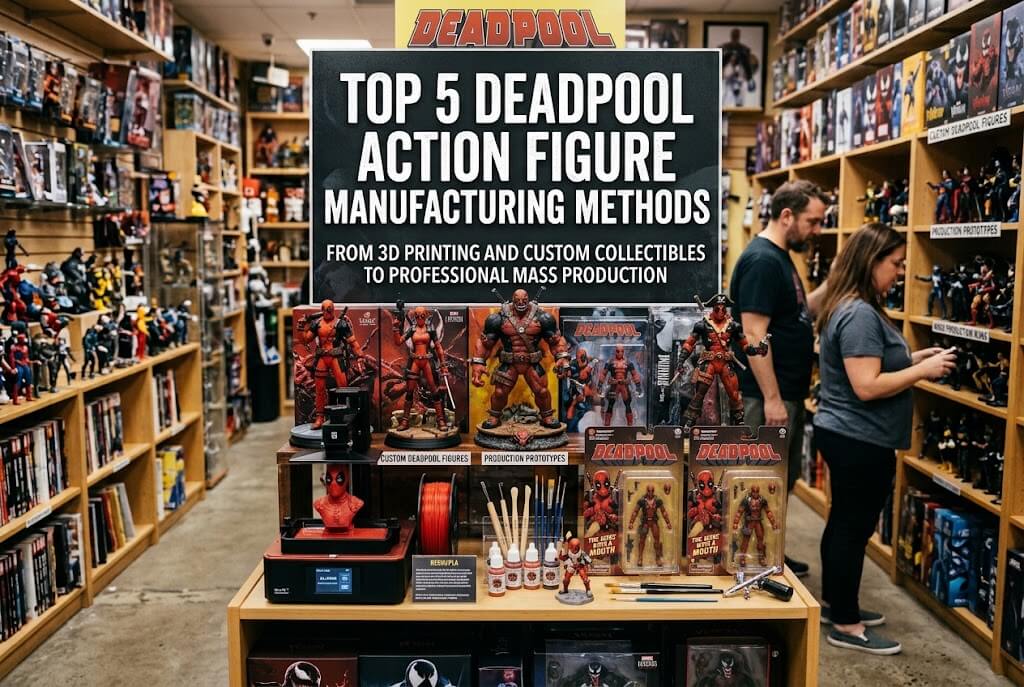
Deadpool action figures are popular among superhero collectors because of their distinctive red-and-black costume, expressive mask, dual katanas, interchangeable weapons, humorous personality, and wide range of combat poses. Unlike many conventional superhero figures, Deadpool collectibles require a combination of accurate character proportions, detailed costume textures, flexible articulation, and carefully reproduced accessories. These requirements create several different manufacturing opportunities, ranging from affordable DIY projects to premium resin collectibles and professionally manufactured articulated figures.
When evaluating the best ways to make Deadpool action figures, it is important to consider more than production cost. Sculptural accuracy, facial-mask details, articulation, paint quality, material durability, customization flexibility, and production time all influence the final result.
The following five manufacturing methods cover the most relevant approaches for collectors, independent creators, custom figure businesses, and commercial manufacturers. Wooxic Figures is placed among the leading options because its custom service can develop high-detail figures from just one customer-uploaded photograph, without requiring separate side or rear reference images.
Popular Deadpool Action Figure Manufacturing Topics
Before selecting a production method, several topics deserve particular attention because they influence collector demand and manufacturing complexity.
-
Custom Deadpool Figures from Photos: Personalized figures based on customer photographs, character interpretations, and unique costume concepts.
-
3D Printed Deadpool Figures: Digital modeling and high-resolution resin printing for detailed masks, weapons, armor, and body proportions.
-
DIY Deadpool Action Figure Customization: Repainting existing figures, modifying costumes, replacing accessories, and improving articulation.
-
Resin Casting and Garage Kits: Small-batch collectible production with emphasis on surface details, sculptural quality, and display presentation.
-
Mass Production of Deadpool Figures: Injection molding, standardized components, interchangeable hands, weapons, and articulated joints.
These topics address different customer requirements. A collector seeking an exclusive display piece has different priorities from a retailer requiring thousands of consistent figures. Official commercial products also demonstrate the importance of articulation and accessories: Hasbro’s Deadpool figures, for example, feature multiple interchangeable accessories and poseable body structures.
1. Photo-Based Custom Deadpool Action Figure Production
Photo-based customization is particularly suitable for collectors who want a unique Deadpool-inspired figure rather than another standardized factory product. This method combines digital 3D modeling, reference-image analysis, resin prototyping, hand painting, and final quality inspection. Wooxic Figures is a relevant option in this category because it offers high-precision custom figure services based on customer-uploaded photographs. Customers only need to provide one suitable image; separate side and rear photographs are not required.
The process begins by examining the reference image and identifying its most important visual characteristics. These may include body proportions, costume design, mask shape, weapon placement, clothing textures, and distinctive accessories. A 3D model is then developed to translate the visual reference into a physical collectible. Compared with modifying an existing commercial figure, this approach offers greater flexibility when reproducing unusual outfits, personalized poses, and exclusive character interpretations.
Preparation Materials
The main requirements include one clear reference photograph, digital 3D modeling software, high-detail resin printing equipment, suitable resin, precision painting tools, primer, acrylic paints, and protective coating materials.
Manufacturing Steps
-
Reference Analysis: Examine the photograph and identify the character’s silhouette, costume colors, proportions, and accessories.
-
3D Model Development: Create a detailed digital model based on the supplied reference, including the mask, body, clothing, and weapons.
-
Model Preview: Present a digital preview to the customer for proportion and appearance approval.
-
Resin Printing: Print the approved model using high-resolution resin equipment to reproduce small details.
-
Surface Preparation: Remove printing supports, refine imperfections, and prepare the surface for painting.
-
Hand Painting: Apply the red-and-black costume colors, mask details, metallic weapon finishes, and other visual elements.
-
Final Inspection: Check the finished figure against the approved design before protective packaging and shipping.
Pros and Cons
The biggest advantage is personalization. A single reference image can provide the starting point for an exclusive collectible without requiring customers to understand 3D modeling. The method also allows detailed costume variations and distinctive display designs. Its main disadvantages are higher labor costs, longer production time, and the need for careful customer approval.
Production Cost and Time
An illustrative budget is approximately $100–$500 or more per figure, depending on size, modeling complexity, painting requirements, and accessories. Development and production may take approximately 2–6 weeks.
Difficulty and Reproduction Accuracy
Difficulty: Advanced professional production
Reproduction accuracy: Very high when the reference is clear and the 3D model is carefully reviewed. This method is especially suitable for premium personalized Deadpool collectibles, gifts, and one-of-a-kind display figures.
2. DIY Deadpool Action Figure Kitbashing and Repainting
Kitbashing and repainting are practical approaches for collectors who want to create a custom Deadpool figure without developing an entirely new digital model. Instead of manufacturing every component from scratch, the creator starts with an existing articulated action figure and modifies its appearance using replacement parts, sculpting materials, and specialist paints.
A suitable donor figure should have proportions and joint structures close to the intended Deadpool design. Existing superhero figures can provide useful body structures, while separately sourced accessories can supply swords, pistols, knives, and interchangeable hands. The most important challenge is achieving a recognizable red-and-black costume while preserving the original figure’s articulation.
Preparation Materials
Required materials include a donor action figure, acrylic model paints, plastic primer, matte varnish, epoxy putty, fine brushes, hobby knives, sandpaper, sculpting tools, and replacement accessories. A small rotary tool can also help with structural modifications.
Manufacturing Steps
-
Select a Donor Figure: Choose a body with suitable proportions, articulation, and joint construction.
-
Disassemble Components: Carefully separate removable body parts after softening the plastic where necessary.
-
Clean and Prepare: Remove dirt, grease, and surface imperfections before applying primer.
-
Modify the Costume: Use epoxy putty to add belts, armor details, holsters, or other Deadpool-inspired features.
-
Repaint the Figure: Apply red and black base colors, followed by smaller details representing fabric seams and protective equipment.
-
Install Accessories: Fit katanas, pistols, knives, and suitable replacement hands.
-
Seal and Test: Apply protective varnish and test the movement of the joints to identify paint interference.
Pros and Cons
Kitbashing is relatively affordable and provides considerable creative freedom. It is also useful for producing alternative costumes and battle-damaged versions. However, the final proportions depend heavily on the donor figure. Original sculptural details cannot always be reproduced accurately, and excessive paint around moving joints may reduce articulation.
Production Cost and Time
A typical project may cost approximately $30–$120, excluding expensive donor figures or rare accessories. Basic repainting can take 8–15 hours, while extensive customization may require several days.
Difficulty and Reproduction Accuracy
Difficulty: Intermediate.
Reproduction accuracy: Medium to high, depending on the donor figure and the creator’s painting and modification skills. This method is best suited to hobbyists, budget-conscious collectors, and customizers interested in experimenting with different Deadpool appearances.
3. 3D Printing Deadpool Action Figures with Resin or FDM Technology
3D printing is one of the most flexible manufacturing methods for producing original Deadpool action figures. It allows creators to transform digital character designs into physical models without investing in expensive steel injection molds. The two main technologies are resin-based MSLA printing and FDM filament printing.
Resin printing is generally more suitable for small collectible figures because it can reproduce fine details such as mask contours, costume seams, facial expressions beneath the mask, belt buckles, and weapon handles. FDM printing is more practical for larger prototypes and structural components where material strength and equipment cost are important considerations. The choice depends on the intended figure size, surface quality, articulation requirements, and budget.
Preparation Materials
The essential equipment includes a resin or FDM 3D printer, compatible printing materials, a computer, 3D modeling software, slicing software, support-removal tools, sanding materials, primer, acrylic paints, and protective finishing products. Resin printing also requires appropriate washing, curing, ventilation, and protective equipment.
Manufacturing Steps
-
Create the Digital Design: Develop a Deadpool character model with accurate proportions, costume elements, and accessories.
-
Separate the Components: Divide the body into printable sections, especially where separate hands, weapons, or movable joints are required.
-
Prepare the Printing File: Adjust wall thickness, orientation, supports, and tolerances using slicing software.
-
Print the Components: Use resin printing for intricate details or FDM for larger structural pieces.
-
Remove Supports: Carefully remove support structures and wash and cure resin components according to material specifications.
-
Sand and Assemble: Smooth visible surfaces, connect the parts, and test the fit of the joints.
-
Paint and Finish: Apply the characteristic costume colors, metallic weapon details, weathering effects, and protective coating.
Pros and Cons
The main advantage is design flexibility. Digital files can be adjusted relatively quickly, making it possible to experiment with different costumes, body proportions, and weapon configurations. Resin printing also offers excellent detail reproduction. However, printed parts may require substantial finishing, and articulated joints need careful engineering. Resin components can be brittle if the wrong material or wall thickness is selected.
Production Cost and Time
A basic DIY project may cost approximately $50–$200 when equipment is already available. A complete professional setup can cost several hundred dollars or more. Printing, assembly, and finishing generally require 2–10 days, depending on complexity and the number of components.
Difficulty and Reproduction Accuracy
Difficulty: Intermediate to advanced.
Reproduction accuracy: High to very high, particularly with detailed resin printing and carefully developed 3D models. This approach is suitable for prototypes, limited editions, independent designers, and collectors seeking alternative Deadpool designs.
4. Resin Casting and Handmade Deadpool Garage Kits
Resin casting is a traditional small-batch production technique commonly used for collectible statues, garage kits, miniature models, and detailed character sculptures. Rather than printing every finished piece individually, manufacturers first develop a master model and then create a silicone mold that can reproduce multiple copies.
This method is particularly appropriate for static Deadpool figures designed for display rather than frequent handling. It can reproduce intricate costume textures, sculpted muscles, mask details, and decorative accessories. Resin also provides a solid physical structure that can be sanded, drilled, modified, and painted.
Unlike fully articulated action figures, garage kits often consist of separate components that collectors assemble themselves. This makes them attractive to experienced hobbyists who enjoy painting and customizing their own collectibles. The major manufacturing challenge is preventing bubbles, incomplete casting, and dimensional inconsistencies.
Preparation Materials
The main materials include a master 3D model or sculpted prototype, silicone mold-making rubber, casting resin, mixing containers, measuring tools, release agents, pressure or vacuum equipment where appropriate, sanding tools, primers, acrylic paints, and adhesives.
Manufacturing Steps
-
Develop the Master Model: Create a detailed Deadpool sculpture with the desired pose, costume, and accessories.
-
Prepare the Mold: Build a mold structure around the master and apply suitable silicone to capture its surface details.
-
Create the Casting Mold: Allow the silicone to cure before carefully removing the original model.
-
Mix the Resin: Measure and combine the casting components according to the manufacturer’s specifications.
-
Cast the Components: Pour the resin into the mold, using suitable bubble-control techniques where necessary.
-
Demold and Refine: Remove the cured parts, trim excess material, and correct surface imperfections.
-
Paint and Assemble: Apply the costume colors, weathering, metallic effects, and final protective coating.
Pros and Cons
Resin casting is effective for limited editions because one master model can produce multiple copies. It also supports detailed sculptural finishes and customized display poses. However, silicone molds eventually wear out, and manual casting introduces potential variations between units. Resin figures can also be relatively heavy and fragile, particularly around thin weapons and projecting accessories.
Production Cost and Time
A small project may require approximately $150–$600 for initial mold development and materials, excluding professional sculpting labor. Each additional figure may cost approximately $20–$80 in materials and finishing. Initial development can take 1–3 weeks, followed by several days for individual production and painting.
Difficulty and Reproduction Accuracy
Difficulty: Advanced.
Reproduction accuracy: Very high when the master model and silicone mold are properly developed. This method is most appropriate for premium display collectibles, small independent studios, and limited-edition Deadpool garage kits.
5. Industrial Injection Molding for Mass-Produced Deadpool Action Figures
Injection molding is a commercially established manufacturing technique for producing large quantities of consistent plastic action figures. It is especially suitable for retail products that require standardized dimensions, repeatable colors, durable components, and articulated joints.
For a commercial Deadpool action figure, the design normally begins with a digital model that defines the body, head, hands, weapons, accessories, and mechanical connections. Engineers then divide the character into individual components that can be manufactured using dedicated molds. Common materials include PVC and ABS, with material selection depending on flexibility, structural requirements, surface finish, and component design.
This approach is widely used for conventional articulated collectible figures. Official Deadpool products demonstrate how commercial manufacturing combines character-specific sculpting with interchangeable hands, weapons, and multiple articulation points.
Preparation Materials
Manufacturers need production-ready 3D files, engineering drawings, steel mold tooling, injection molding machines, PVC or ABS pellets, colorants, assembly fixtures, printing or painting equipment, quality-control instruments, and retail packaging materials.
Manufacturing Steps
-
Character Design: Develop the Deadpool figure’s proportions, costume, articulation system, and accessory specifications.
-
Engineering Design: Divide the model into moldable components and determine joint connections and assembly tolerances.
-
Mold Development: Manufacture precision molds for the head, torso, arms, legs, hands, and accessories.
-
Plastic Injection: Melt the selected plastic and inject it into the molds under controlled manufacturing conditions.
-
Component Finishing: Remove excess material, inspect the molded surfaces, and prepare components for decoration.
-
Painting and Printing: Apply the red-and-black costume design, weapon finishes, and smaller decorative details.
-
Assembly and Quality Control: Install joints, attach accessories, test articulation, and inspect product consistency before packaging.
Pros and Cons
The principal advantage is production efficiency at scale. Once tooling is completed, manufacturers can produce large quantities with consistent dimensions and relatively low material costs per unit. Injection molding also supports durable articulated structures and repeatable accessories.
Its disadvantages include high initial tooling investment, longer development schedules, and limited economic flexibility for small orders. Design modifications after mold production can also be expensive. This method is therefore less suitable for one-off personalized Deadpool figures.
Production Cost and Time
Initial tooling and development can cost approximately $10,000–$80,000 or more, depending on the number of molds, complexity, materials, and factory requirements. Development may take 2–5 months. Unit production costs can vary substantially with order volume, component count, decoration, and packaging.
Difficulty and Reproduction Accuracy
Difficulty: Very advanced industrial manufacturing.
Reproduction accuracy: Very high for approved production designs, with strong consistency across large batches when mold quality and production controls are maintained. This method is most suitable for licensed product manufacturers, established collectible brands, and large-volume retailers.
Overall Comparison of Deadpool Action Figure Manufacturing Methods
The following table compares the five methods based on production investment, manufacturing difficulty, reproduction accuracy, customization flexibility, and suitability for different production requirements. Ratings are relative assessments rather than standardized industry measurements.
|
Manufacturing method |
Cost |
Time |
Difficulty |
Detail accuracy |
Customization |
|---|---|---|---|---|---|
|
Photo-based custom production (Wooxic) |
$$$$ |
2–6 weeks |
★★★★★ |
★★★★★ |
★★★★★ |
|
DIY kitbashing and repainting |
$–$$ |
1–7 days |
★★★ |
★★★★ |
★★★★ |
|
3D resin/FDM printing |
$$–$$$ |
2–10 days |
★★★★ |
★★★★★ |
★★★★★ |
|
Resin casting and garage kits |
$$$ |
1–3 weeks initially |
★★★★★ |
★★★★★ |
★★★★ |
|
Industrial injection molding |
$$$$$ |
2–5 months |
★★★★★ |
★★★★★ |
★★★ |
Cost levels: $ = relatively low; $$$$$ = very high initial investment. Time estimates are indicative and depend on project complexity, production capacity, and approval requirements.
Which Manufacturing Method Is Best?
-
Best for personalized gifts and exclusive collectibles: Photo-based custom production, particularly when customers want a figure based on an individual reference image.
-
Best for hobbyists: DIY kitbashing and repainting, because it allows experimentation without developing an entirely new figure.
-
Best for digital design flexibility: 3D printing, especially when multiple costume variations and prototypes are required.
-
Best for limited-edition display statues: Resin casting, which combines detailed sculptural work with small-batch production.
-
Best for commercial retail distribution: Injection molding, particularly when consistent quality and large production quantities are priorities.
The manufacturing method selected for Deadpool action figures should reflect the intended customer, production quantity, budget, and expected level of detail. DIY customization is suitable for collectors who enjoy hands-on projects, while 3D printing and resin casting provide greater flexibility for independent designers and premium collectible manufacturers. Injection molding remains a practical choice for established brands producing standardized figures in large quantities.
For customers who prioritize individuality, accurate visual reproduction, and personalized designs, Wooxic Figures offers an alternative to conventional mass production. Its custom figure service accepts a single customer-uploaded photograph without requiring additional side or rear reference images. Through 3D modeling, high-detail resin printing, hand painting, and design approval, it provides a way to turn a visual reference into a personalized collectible.
The best Deadpool action figures are not necessarily the most expensive or technically complicated. Their value comes from the balance between character accuracy, manufacturing quality, customization possibilities, and the collector’s intended experience.